|
IN BRIEF
|
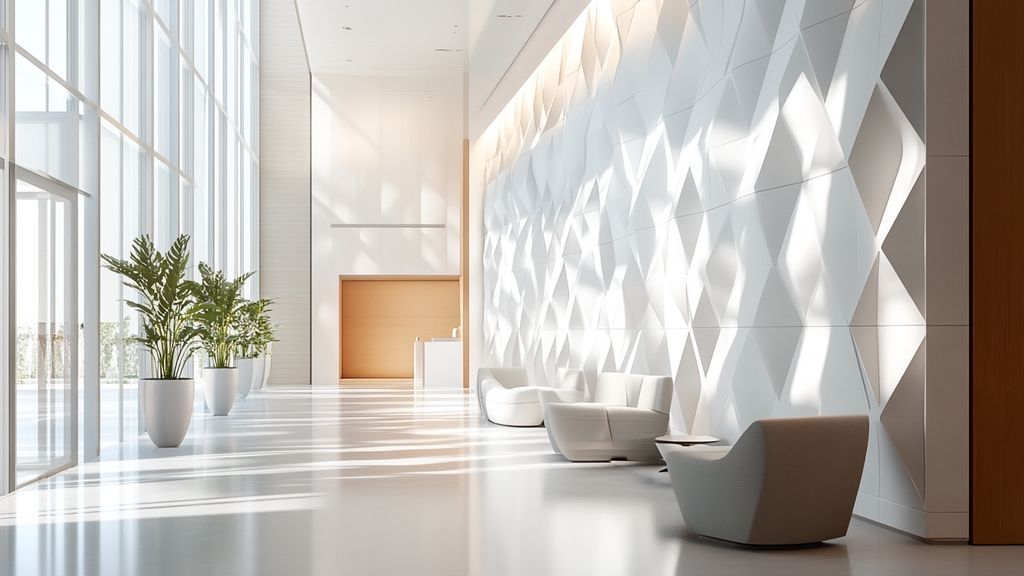
Modern architecture relies on geometry not only for its aesthetic aspect but also as a fundamental tool in design and construction. Geometric shapes provide a visual and functional language that allows architects to play with space, light, and materials. In this context, the use of harmonious proportions and symmetries becomes essential to create structures that are both innovative and balanced. Whether through the cubic form, which evokes a sense of solidarity, or the application of sacred geometry, the relationship between mathematics and architecture proves to be crucial in meeting contemporary challenges and giving life to bold projects.
Geometry plays a fundamental role in modern architecture, guiding architects in the creation of structures that are both aesthetic and functional. Through mathematical principles such as proportions, symmetries, and geometric shapes, designers are able to create architectural works that combine technical innovation and visual beauty. This article explores the various applications of geometry in the field of contemporary architecture.
Geometry and Architectural Forms
Geometric shapes play a crucial role in the perception of buildings. Among them, the cubic form is particularly favored as it evokes a feeling of solidity and power. Architects use this type of shape to design structures that inspire trust, such as corporate headquarters and museums. The simplicity of cubic lines also facilitates the integration of buildings into their environment, allowing for the creation of harmonious compositions.
Proportions and Symmetries: The Keys to Architectural Beauty
Proportions and symmetries are essential elements in architectural creation. The use of the golden ratio, for example, is emphasized to achieve structures that are perceived as balanced and visually pleasing. This quest for harmony translates into the search for harmonious relationships between the different parts of a building, whether in the facade or the interior spaces.
Sacred Geometry: An Ancient Art in Service of Modern Architecture
Sacred geometry has always fascinated architects. By integrating proportions based on ancient mathematical rules, such as those producing the golden triangle, designers create spaces imbued with spirituality and aesthetics. This approach results in public squares and temples that reflect the harmony between architecture and human beliefs. It is fascinating to see how these concepts, perceived as outdated, resurface to enrich modern architecture.
Geometric Modeling and Technology
With the advent of new technologies, geometric modeling has taken a prominent place in the architectural design process. Advanced software allows architects to carry out simulations and digital prototypes, thus facilitating the exploration of new forms and structures. The ability to model complex buildings before their physical construction ensures visual and structural coherence while allowing for real-time adjustments and optimizations.
Contemporary Applications and Geometric Challenges
Contemporary geometry offers infinite possibilities for architects, allowing them to explore bold and innovative shapes. However, these new forms also pose technical challenges due to their complexity and construction constraints. Architects must combine creativity and mathematical rigor to design buildings that can not only exist on paper but also be realized in reality, adhering to safety and sustainability standards.
The applications of geometry in modern architecture testify to the harmony between science and art. By relying on mathematical principles, architects create buildings that not only meet functional needs but also enrich our physical and visual environment. The ongoing search for new geometric approaches will undoubtedly contribute to the evolution of architecture in the years to come.
| Comparison Axis | Details |
| Proportions | The use of harmonious proportions like the golden ratio to create aesthetically pleasing works. |
| Geometric Shapes | Cubic shapes provide an impression of strength and stability in constructions. |
| Symmetry | The principles of symmetry are essential to balance structural and visual elements. |
| Modeling | A geometric modeling effort is necessary to merge creativity and construction techniques. |
| Sacred Geometry | Inclusion of sacred geometry to establish connections between the spirit, art, and architecture. |
| Planning | Engineers and architects integrate geometry to optimize space and functionality in buildings. |
| Innovation | Avant-garde architectural forms emerge thanks to new modeling technologies. |
In today’s world of modern architecture, mathematics plays a crucial role, particularly geometry. This discipline allows architects to reconcile aesthetics and functionality in their creations. This article explores the various applications of geometry in contemporary architecture, highlighting its importance in the design and planning of architectural projects.
Geometry as the Foundation of Architecture
Geometry is the cornerstone of architecture. It provides a reference framework for designers, enabling them to create harmonious and balanced shapes. Architects rely on basic geometric shapes such as the cube, the cylinder, and the cone to develop structures that encourage strength and durability. Indeed, the cubic form is widely used as it conveys a sense of strength and integrity.
Proportions and Symmetries: Essential Tools
Another fundamental aspect of geometry in modern architecture is the use of proportions and symmetries. These concepts allow architects to create visually appealing spaces while ensuring their functionality. The principles of sacred geometry, particularly the golden ratio, are often integrated into the design to achieve a harmonious and captivating aesthetic. The application of these principles helps establish an emotional link between the space and those who occupy it.
Geometric Modeling and Contemporary Techniques
With the advancement of technologies, today’s architects use geometric modeling software to design complex structures. This allows them to explore free forms, bridging creativity and constructive technique. With this approach, innovative buildings can be realized, reflecting both bold designs and strict technical requirements.
The Role of Mathematics in the Design Process
Mathematics is not just limited to precise calculations; it is essential throughout the architectural design process. Architects rely on mathematical concepts to assess dimensions, angles, and even the stability of structures. From the preliminary design to the final execution, mathematics and geometry intertwine to bring large-scale architectural projects to life.
Education and Training in Architectural Geometry
The training of future architects includes an in-depth teaching of geometry principles. Learning about cutting, representation, and geometric modeling is essential to mastering the creation of structures. Even with the advent of digital technologies, drawing remains a fundamental tool for expressing their architectural vision.
The challenges of these mathematical methods and techniques highlight the growing importance of mathematics in the architectural field. To delve deeper into this topic, one can explore the key mathematical theorems that have profoundly influenced the development of modern architecture.
- 3D Modeling: Use of advanced software to represent complex structures.
- Harmonious Proportions: Application of the golden ratio to create aesthetic designs.
- Geometric Structures: Integration of shapes like cubes and spheres for stability.
- Symmetry: Use of symmetrical patterns for visual balance in buildings.
- Fractals: Inspiration from repetitive patterns for facades and landscaping.
- Sacred Geometry: Incorporation of ancestral concepts for constructions linked to nature.
- Structural Analysis: Use of geometry to assess the strength and durability of materials.
- Architectural Aesthetics: Blending geometric shapes and creativity for a modern approach.
- Parametric Buildings: Design of adaptable structures based on geometric formulas.
- Modular Spaces: Creation of flexible environments through interchangeable geometric elements.
Geometry occupies a central place in modern architecture, influencing the design and realization of structures. Architects rely on various geometric shapes, harmonious proportions, and advanced techniques to create innovative and aesthetic buildings. This article examines the different applications of geometry in the field of contemporary architecture.
Fundamental Geometric Shapes
Modern architectural structures are often based on fundamental geometric shapes. Among them, the cubic form stands out for its ability to convey an impression of strength and solidity. This type of construction also optimizes interior space while harmoniously integrating with its environment. Other shapes, such as spheres and pyramids, add elements of surprise and visual interest while respecting structural requirements.
Proportions and Symmetries
Geometry serves as a crucial tool for architects by allowing them to manipulate proportions and symmetries. When designing buildings, the choice of ratios between different dimensions is essential to ensure visual balance. Aesthetic considerations intertwine with mathematical principles, ensuring that the structure is both functional and appealing. The concept of the golden ratio, for example, finds its place in many architectural designs, allowing for a natural harmony.
Geometric Modeling
With the emergence of digital technologies, geometric modeling has transformed the way architects design their projects. Advanced software allows for the manipulation of complex shapes, exploration of three-dimensional concepts, and analysis of different constructive options. Organic and fluid forms, which were once difficult to achieve, can now be designed with unrivaled precision, paving the way for new architectural styles.
Fractals and Sacred Geometry
The framework of certain modern structures also relies on fractals, which are repeated patterns at different scales. These geometric shapes, found in nature, are now used by architects to create innovative and inspiring designs. Additionally, sacred geometry, with its use of harmonious scales and ideal proportions, continues to influence contemporary architecture, establishing a connection between aesthetics and spirituality.
Teaching and Architectural Practices
Finally, the teaching of geometry in architectural schools remains fundamental. Despite the development of digital tools, knowledge of geometric principles is still a crucial aspect of the creative process. Architects learn not only to draw but also to understand the geometric implications of their designs. This solid foundation allows them to innovate while being aware of the technical challenges that their work entails.
The Future of Geometry in Architecture
As architecture evolves, the role of geometry continues to grow. New perspectives offer a wide range of applications, and architects will need to continue exploring bold approaches to meet an increasing demand for sustainability and functionality. The symbiosis between math and architectural structures looks promising for the future of construction, integrating creativity and scientific rigor to build the world of tomorrow.