|
IN BRIEF
|
The convergence between physics and archaeology has given rise to modern detection tools that revolutionize the way we explore the past. Thanks to advanced techniques such as laser remote sensing (LiDAR) and geophysics, archaeologists can now identify buried remains without disturbing archaeological sites. These methods allow for precise mapping and localization of ancient structures while offering an innovative perspective on the evolution of civilizations. The integration of physical science into archaeological practices opens promising avenues for the discovery and understanding of our historical heritage.
The conjunction of physics and archaeology has enabled access to modern detection methods that revolutionize the way we explore and discover our past. Thanks to technological advancements, tools such as laser remote sensing (LiDAR) and geophysics provide valuable information without harming buried remains. This article highlights these innovative tools and their impact on contemporary archaeology.
Geophysics: a revolution for archaeology
Geophysics has become an essential tool for archaeologists. By using various prospection techniques, researchers can explore the subsurface in search of remains without conducting invasive excavations. Methods such as magnetometry, electrical resistivity, and acoustics are employed to produce images of underground architecture, revealing secrets of our buried history.
Geophysical detection techniques
Geophysical detection methods allow for comprehensive mapping of archaeological sites. For example, magnetometry measures variations in the magnetic field of the ground that may indicate the presence of buried structures, while resistivity assesses the electrical conductivity of the ground to detect anomalies that could signal ditches or walls. These techniques enable an initial assessment of sites without disturbing the soil.
LiDAR technology: a new era for prospection
LiDAR technology (or Light Detection and Ranging) has profoundly transformed the field of archaeology. By using lasers to scan the terrain, this method allows for precise mapping of the topography and detection of structures that may be hidden by dense vegetation.
Applications of LiDAR in archaeology
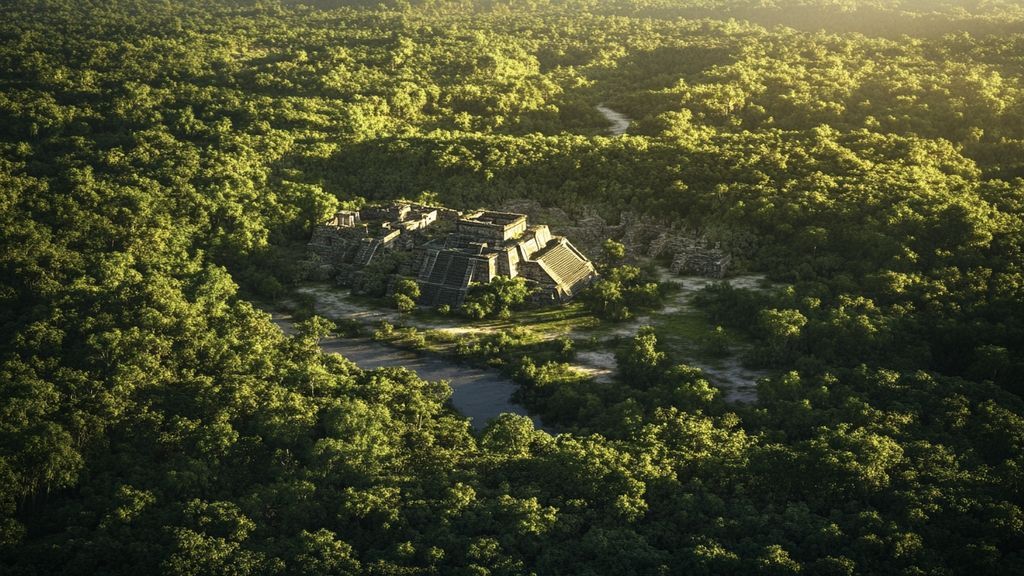
LiDAR has allowed for the rediscovery of many important sites, notably in Central America, where Maya ruins were hidden by thick foliage. The data collected provides a three-dimensional representation of the terrain, facilitating the mapping of ancient cities and forgotten infrastructures. This technique also offers planning possibilities for potential excavations.
Physics-assisted dating methods
Alongside detection tools, physics also plays a key role in dating artifacts. Archaeologists use dating methods such as radiometric dating, which allows for determining the age of organic materials by measuring the radioactivity of isotopes.
Importance of dating in archaeology
Dating methods provide an essential chronological framework for understanding historical and cultural events. By integrating physical data with results from geophysical prospection, researchers can establish accurate timelines, thereby enriching our understanding of the evolution of civilizations.
Conclusion: interdisciplinarity serving archaeology
The combination of physical techniques and traditional archaeological methods opens innovative perspectives for archaeological research. The use of geophysics, LiDAR, and dating methods testifies to a promising synergy between modern science and the exploration of our past.
| Tool | Application |
| LiDAR | Locates archaeological structures by revealing shapes hidden beneath vegetation. |
| Satellite imagery | Allows for locating remains on a large scale with topographical details. |
| Remote sensing | Identifies soil composition and the presence of archaeological elements. |
| Geophysics | Mapping of the subsurface, detection of cavities, and buried structures. |
| 3D scanners | Generate three-dimensional models of sites for detailed analysis. |
| Radiometric dating | Estimates the age of artifacts by measuring the isotopes present. |
| Drone | Takes aerial images for monitoring and documentation of sites. |
| Chemical analysis | Determines the composition of materials, essential for dating. |
In the quest to unveil the secrets of the past, physics and archaeology come together through modern detection tools. These technological advances allow for the exploration of the subsurface without altering the hidden heritage, offering new perspectives on our ancestors. This article examines the synergies between these two fascinating fields, emphasizing the innovative techniques and tools that are revolutionizing archaeological research.
Geophysics: a valuable ally
Geophysics plays a fundamental role in modern archaeology. By using non-invasive techniques, it is possible to detect buried remains in the soil, preserving the site and its history. Methods such as resistivity, IP (inductive electromagnetic), and seismic are commonly used to obtain detailed images of the subsurface, enabling archaeologists to plan their excavations more effectively.
LiDAR: a technological revolution
LiDAR technology (Light Detection and Ranging) has transformed the way archaeologists identify and map archaeological sites. Through laser remote sensing, this method reveals hidden structures, even beneath dense forest cover. Ancient ruins, some of which were previously invisible, are now accessible thanks to this advancement, thus changing our understanding of past societies.
Modern dating: a precision tool
Archaeological research also relies on precise dating methods. Archaeologists use radiometric dating to establish the age of artifacts and organic materials. This technique is based on the physical principles of radioactive decay, allowing for reliable results that enrich our understanding of the human timeline.
Airborne remote sensing: an overview
In addition to terrestrial tools, airborne remote sensing energizes archaeological prospection. By combining satellite images and aerial photographs, this method provides an expanded perspective on the archaeological landscape. Archaeologists can detect surface anomalies, such as ancient ditches or structures, thus facilitating subsequent research.
Innovation and collaborative research
Collaboration between physicists and archaeologists is essential to integrate these new technologies into the field of archaeology. The creation of geolocated databases, combined with data from geophysical diagnostics, allows for the construction of rigorous archaeological files. These synergies pave the way for unprecedented discoveries and deepen our understanding of human history.
The impact of volcanoes on archaeology
Finally, it is important to consider how natural phenomena such as volcanic eruptions can influence archaeological research. Volcanic ash, for example, sometimes preserves remains on its surface. Understanding these interactions between geological physics and archaeological sites enriches our knowledge of the impact of natural disasters on past civilizations. To learn more about the role of volcanoes and their influence on the terrestrial environment, check out these links: Volcanic eruption forecasts, The impact of volcanoes on the terrestrial environment, and Impact of volcanoes on the terrestrial environment.
- Geophysics: detection of remains below the surface without disturbance.
- LiDAR technology: precise mapping through dense vegetation.
- Airborne remote sensing: identification of archaeological structures on a large scale.
- Satellite imagery: observation of archaeological sites from space.
- Magnetic prospection: detection of magnetic anomalies related to remains.
- Ground penetrating radar: visualization of underground layers.
- Radiometric dating: establishment of the age of artifacts and structures.
- 3D modeling: digital reconstruction of sites and archaeological objects.
- Archaeological diagnostics: characterization of remains before excavations.
- Sensometry: analysis of the physical properties of soils to locate sites.
The synergy between physics and archaeology has led to the development of modern detection tools that revolutionize research and exploration methods of past remains. Thanks to innovative techniques such as remote sensing, geophysics, and the use of laser technologies like LiDAR, archaeologists can now explore subsurface areas without disturbing archaeological sites, while obtaining precise information about their structure and dating.
Geophysics and its applications in archaeology
Geophysics is a valuable tool for archaeologists, allowing for non-invasive prospections. Using techniques such as seismic, magnetometry, or electrical resistivity, it is possible to detect structures buried in the ground. These methods provide detailed images of the subsurface, helping to locate archaeological remains even before excavation occurs. Therefore, these techniques are essential allies in archaeological research.
Magnetic resonance imaging
One flagship application of geophysics in archaeology is magnetic resonance imaging. This process allows for analyzing the magnetic properties of materials in the subsurface, thus providing information on buried objects. By integrating this technique into an archaeological project, researchers can optimize their excavations, avoiding unnecessary disruptions.
LiDAR: a revolutionary tool
The acronym LiDAR, which stands for Light Detection and Ranging, refers to a laser remote sensing technology that radically transforms archaeology. Through satellites and drones equipped with laser sensors, it becomes possible to generate three-dimensional models of the terrain, even through dense forest cover. This has led to the rediscovery of many sites, including Maya ruins that were previously invisible to the naked eye.
Precise mapping and measurement
LiDAR allows archaeologists to obtain topographic maps with unparalleled precision. These maps provide essential geographical context for site interpretation, facilitating the analysis of the surrounding landscape as well as understanding human interactions with their environment. Additionally, the technology offers high-precision measurement capabilities that support dating and localization of remains.
Advanced dating techniques
Modern dating methods play a crucial role in archaeologists’ work. By combining geophysical analysis with techniques such as radiometric dating, it is possible to establish the age of materials found on a site with great accuracy. These approaches provide a temporal framework that enriches the historical understanding of discovered archaeological remains.
Data fusion
To ensure the reliability of results, it is essential to integrate geophysical and dating data within a homogeneous database. This allows researchers to fully exploit information in order to better characterize sites and establish connections between different remains. By using digital tools, it also becomes easier to share this data within the scientific community.
FAQ – Physics and archaeology: modern detection tools
What are the applications of geophysics in archaeology? Geophysics is used to detect archaeological remains without excavating, thus allowing images of the subsurface to be obtained.
How has LiDAR changed archaeology? LiDAR technology allows for mapping and measuring ancient structures hidden beneath dense vegetation, thus revolutionizing archaeological methods.
What does archaeological prospection involve? Archaeological prospection employs geophysical techniques to locate sites of interest by providing an overview of what lies beneath the ground.
What dating methods do archaeologists use? Archaeologists employ radiometric dating methods to determine the age of organic materials discovered during excavations.
What modern tools are used in archaeology? Archaeologists use tools such as satellite imagery, airborne remote sensing, and LiDAR to identify and map historical sites.
How does an archaeological diagnosis proceed? Archaeological diagnosis consists of examining an area to identify, characterize, and date potential remains, which is crucial for research.
What is preventive archaeology? Preventive archaeology aims to protect archaeological remains by conducting diagnostics before construction or development projects.
What advantages does modern technology offer to archaeologists? The development of modern technology, including miniaturization of devices, allows for better data collection in the field without disturbance.