|
IN BRIEF
|
The relationship between physics and art is a fascinating field where science and creativity meet to give birth to innovative and inspiring ideas. For centuries, artists have drawn from scientific discoveries to nourish their imagination, while physicists often find inspiration in the aesthetics of artworks to conceptualize complex notions. This interaction demonstrates that the aspiration to understand the world can be coupled with the quest for beauty, thus facilitating a fruitful exchange between emotion and reason. The two disciplines, although seeming to belong to different dimensions, converge around a common goal: exploring the mysteries of the reality that surrounds us.
The link between physics and art is often perceived as a dichotomy where scientific rationality opposes artistic emotion. Yet, this relationship is much more complex and enriching. Science, especially physics, can play a fundamental role in the emergence of artistic creativity. This article explores how these two disciplines converse, mutually inspire each other, and enrich themselves through their interactions.
An inexhaustible source of inspiration
For centuries, artists have drawn inspiration from scientific discoveries. Whether through the movement of particles, the concepts of chaos, or even the theory of fractals, physics offers a wealth of themes and creative materials. Painters like Leonardo da Vinci, who combined art and science, to contemporary works that integrate physical concepts, it is clear that artistic creativity can flourish in the exploration of nature’s laws. Gregory Bateson said that art is a way to make the invisible visible, a quote that perfectly illustrates the interaction between these two domains.
The processes of observation and experimentation
At the crossroads of science and art lie the processes of observation and experimentation. Scientists and artists often share the same method: exploring ideas through deep observation of the world around them. For example, visual artists use the principles of light and shadow discovered by physicists to transform everyday scenes into majestic works. Likewise, physicists do not hesitate to adopt a creative approach to formulate hypotheses. This interdependence enriches both art and science, allowing them to push the boundaries of their respective disciplines.
Communication and visualization of concepts
An often-overlooked aspect of the relationship between art and science is how they communicate complex ideas. Artists use visualizations to make scientific concepts accessible. For example, works that illustrate theories like Einstein’s relativity or quantum mechanics help make these difficult subjects more accessible to the general public. On the other hand, scientists can learn from artists how to make their presentations more impactful. By developing attractive visuals, they thus facilitate the understanding of often abstract theoretical concepts.
The symbiosis between art and science
The relationship between art and science can be described as a symbiosis, where each domain nourishes the other. This collaboration is visible through interdisciplinary projects where scientists work with artists to create works that explore scientific themes. The Porosity platform, for example, promotes this idea by bringing together creators and researchers. The results of these projects often offer a new perspective that encourages seeing science from an artistic angle and vice versa.
The impact of technology on creativity
With the emergence of new technologies, such as augmented reality and 3D modeling, the link between science and art continues to strengthen. These tools allow artists to explore physics concepts in ways that were not possible before. Technology thus becomes a medium in itself in artistic creation, inviting unprecedented experimentation where the virtual and the real meet. Projects developed around mathematics and theorems that changed the world are eloquent examples of the infinite possibilities that arise.
Conclusion of a fruitful dialogue
This constant dialogue between physics and art creates a space where creativity can fully flourish. It blurs the traditional boundaries between these disciplines and shows that when one considers scientific principles and artistic expressions as complementary, the possibilities for innovation and exploration are infinite. Ultimately, human creativity, whether expressed through art or revealed by science, mutually enriches itself, thereby enhancing our understanding of the world around us.
Interactions between Physics and Art
| Aspect | Description |
| Inspiration | Artists draw scientific concepts to create innovative works. |
| Visualization | Art offers a new perspective on complex scientific data. |
| Experimentation | Artists experiment with materials and techniques influenced by science. |
| Technology | Technological advances in physics fuel new forms of art. |
| Communication | Artworks create a dialogue on scientific topics with the general public. |
| Aesthetics | The beauty of physical phenomena stimulates artistic creativity. |
| Collaboration | Interdisciplinary projects bring artists and scientists together around common themes. |
| Emotions | Artists translate scientific concepts into emotional experiences. |
In a world where physics and art seem to belong to distinct domains, it is fascinating to observe how these two spheres can mutually nourish each other. Science offers a rational framework that can stimulate artistic creativity, while art allows for the exploration of scientific concepts in both a visual and emotional manner. This article examines the dynamic relationship between physics and art, revealing how this interaction can enrich the human experience.
A mutual source of inspiration
For centuries, artists, whether painters, sculptors, or writers, have drawn their inspiration from scientific discoveries. Physics provides a new light on the world around us, allowing artists to explore complex themes such as light, space, and motion. For example, the play of light in Claude Monet’s works reflects a desire to question the nature of perception, a subject also dear to physicists.
The visualization of scientific concepts
Art allows for the visualization of abstract ideas often inaccessible to the general public. Fractals, for instance, are mathematical objects that illustrate the beauty and complexity of nature. By consulting resources like this link, one can discover how these fascinating structures have inspired contemporary artists to create works evoking infinity and detail. Science then becomes a vector of creativity on the road to artistic sensibility.
Experimentation and artistic creation
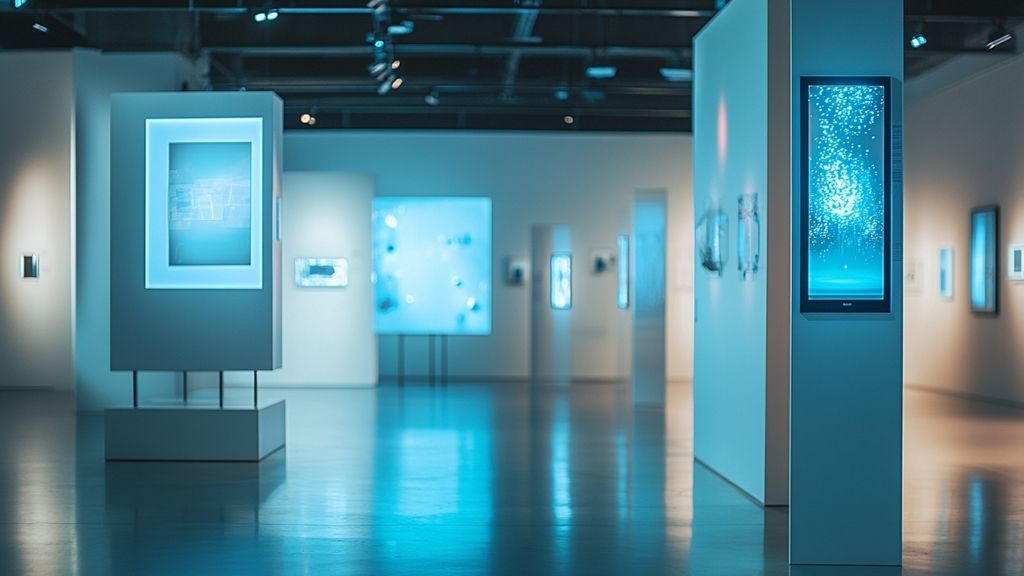
Contemporary artists often experiment with scientific techniques to create works that sit at the crossroads of art and physics. Installations that use light and shadow highlight physical principles to produce unique sensory experiences. This interdisciplinary approach raises questions about the role of art in interpreting scientific discoveries, reinforcing the idea that art and science are actually allies in the quest for human understanding.
Education and scientific popularization
The fusion of physics and art not only inspires artists but also plays a crucial role in education and scientific popularization. By making science more accessible through art, we engage a broader audience in discussions about complex concepts. The use of visual and performing arts in science classes, along with artistic exhibitions in museums, transforms learning into an enriching and immersive experience.
The links between mathematics and beauty
It is also important to consider the role of mathematics in this dynamic. Prime numbers, for example, are a source of wonder for both scientists and artists. This exploration of underlying structures highlights the beauty of artworks while contributing to a broader reflection on the human condition. Moreover, concepts such as applications of mathematics in our daily lives help anchor these ideas in tangible reality.
The history of physics through art
Finally, history offers us fascinating narratives where art and science intertwine. Iconic figures like Leonardo da Vinci testify to a deeply rooted commitment to exploring the properties of light and the human body, evoking wonder and curiosity. For more details on this journey, read this article on the history of physics.
In summary, the relationship between physics and art is not only fascinating, but it also paves the way for a multitude of perspectives on human creativity.
- Relationship: Art and science share a creative inspiration.
- Observation: Artists and scientists use observation of natural phenomena.
- Experimentation: The processes of artistic creation involve experimentation similar to scientific research.
- Visualization: Both fields employ visions to communicate complex ideas.
- Collaboration: Projects combining art and science emerge, fostering new forms of expression.
- Sensitivity: Art engages emotion while science seeks truth.
- Innovation: The use of new technologies in the arts nourishes scientific research.
- Education: Scientific popularization initiatives inspire artists to create accessible works.
The relationship between physics and art is an inexhaustible source of inspiration, where the creativity of one nourishes the rationality of the other. This article explores how science, particularly physics, stimulates various artistic expressions and how these, in turn, offer a new lens through which to interpret the scientific world. Through concrete examples, we will examine this enriching interaction that shapes our understanding of the universe.
The Foundations of Scientific Creativity
Creativity flourishes in a bed of observation and experimentation. In physics, the ability to question established rules is essential. Just as an artist chooses their colors, a physicist plays with theories to explore abstract ideas. This requires a vivid imagination, capable of conceiving models and anticipating phenomena before proving them through experiment. This interaction between art and science constitutes a continuous dialogue, where one feeds the other.
When Physics Inspires Art
Many artists have always drawn inspiration from scientific advances. For example, the cubist movement, embodied by artists like Picasso, draws on new theories about the perception of light and space. Fractals, discovered in mathematics and having implications in physics, have also found their place in contemporary artwork, highlighting the beauty of natural complexity.
Technologies at the Service of Art
The emergence of new technologies, such as digital imaging and augmented reality, opens new avenues for artistic creation. Scientists and artists collaborate to develop installations that explore physics concepts, such as chaos theory or elementary particles. These joint projects result in immersive experiences, making science not only intelligible but also emotionally engaging.
Artistic Inspirations in Scientific Research
Conversely, artists bring a unique perspective to scientific research. Their ability to visualize abstract concepts helps scientists communicate complex ideas. The use of shapes and colors can turn incomprehensible data into something tangible, thus facilitating scientific popularization. Art exhibitions linked to scientific discoveries allow the public to engage with current scientific issues, reinforcing the capacity of art to awaken consciousness.
Historical Examples
Iconic figures like Leonardo da Vinci have illustrated this symbiosis between art and science, combining a profound scientific understanding with a keen artistic sense. Their works demonstrate how scientific curiosity can transform a canvas into a space of exploration and experimentation. In modernity, movements like surrealism have also delved into the mysteries of quantum physics to create works that defy conventional logic.
Advancing the understanding of the laws of the universe through art offers enriching perspectives for both domains. One illuminates the other, and together, they chart a path toward a future where creativity and science are no longer seen as separate entities, but as inseparable partners in the quest for knowledge.
FAQ: Physics and Art – When Science Inspires Creativity
What is the relationship between art and science?
Art and science maintain a symbiotic relationship where creative inspiration, observation, and experimentation play a central role. Artists draw inspiration from scientific discoveries, while scientists rely on art to illustrate and communicate their ideas.
How does science stimulate artistic creativity?
Science provides artists with tools and concepts that enrich their work. Disciplines like physics or mathematics introduce notions of form, color, and movement that can transform a work of art.
Do artists need to understand science to create?
While it’s not a necessity, an understanding of certain scientific rules can enrich the creative process. It allows artists to explore new perspectives and push the boundaries of their creativity.
What examples illustrate the connection between art and science?
Iconic figures like Leonardo da Vinci or contemporary movements explore this connection. Many modern artworks incorporate scientific concepts, illustrating how scientific research nourishes artistic creativity.
What is the Porosity platform?
Porosity is an online platform aimed at creating a dialogue between art and science, allowing artists and scientists to exchange ideas, collaborate, and mutually inspire each other in their respective creations.
Why is it important to explore the synergy between arts and sciences?
Exploring this synergy allows for transcending traditional boundaries of disciplines and encourages a multidisciplinary approach that fosters innovation and robustness of creative ideas.