|
IN BRIEF
|
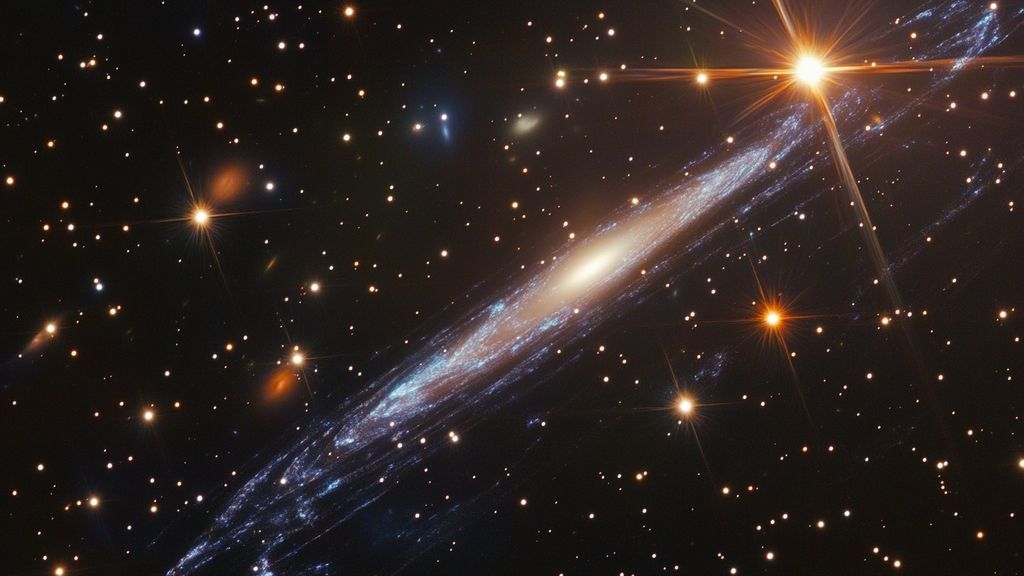
The Universe, in all its splendor, is revealed to be a vast carefully woven network, composed of cosmic filaments interlinked. These thread-like structures, made up of galaxies and galaxy clusters, form what is called the cosmic web. On an unimaginable scale, these galactic filaments stretch across hundreds of millions of light-years, delineating large almost empty regions between walls of matter. By observing such arrangements, astronomers strive to understand the distribution of matter in the Universe and how different structures have formed. These discoveries offer a fascinating insight into the composition of our cosmos and the mysteries surrounding it.
In the vastness of the universe, cosmic filaments represent fascinating structures that unveil the deep organization of matter. They form a complex network, known as the cosmic web, that defines the distribution of galaxies and galactic clusters on colossal scales. This article explores this mysterious structure, its origin, and the implications it has on our understanding of the universe and its phenomena.
What is a cosmic filament?
Cosmic filaments are elongated structures, resembling threads, made up of galaxies and galaxy clusters. They form along dark matter and gas, creating a unique architecture in the cosmos. Filaments can stretch for hundreds of millions of light-years, thus forming some of the largest known structures in the universe. These elements are essential for understanding how matter has organized since the Big Bang.
The cosmic web: a lace-like architecture
The cosmic web is the visual representation of the filaments and voids that punctuate the universe. This complex network is composed of walls of galaxies that delineate vast almost empty regions, creating an uneven density of matter. This distribution pattern was predicted by cosmological models and has been widely observed thanks to modern instruments. Indeed, these filaments are not only simple lines but dynamic entities in rotation that influence gravity on a galactic scale.
The origins of galactic filaments
Galactic filaments are the result of a complex evolution in the primordial universe. In the first moments after the Big Bang, fluctuations in matter density led to the formation of these filamentary structures over billions of years. As the universe expanded, dark matter, which constitutes the majority of the universe’s mass, began to clump together to form threads, attracting gas and galaxies thus bounding their edges.
The rotating filaments: a fascinating dynamic
Recent studies have shown that cosmic filaments are not static but exhibit rotation. This dynamic raises exciting questions about the role of gravity and dark matter in the evolution of large cosmic structures. The rotation of filaments may also influence the movement and arrangement of nearby galaxies, suggesting a dynamic interaction between the visible and invisible matter of the universe.
The implications of filaments for astronomy
Understanding cosmic filaments is crucial for astronomers who study the organization of the universe and the origin of galaxies. These structures provide clues about the formation of the universe on a large scale and how galaxies interact with one another. By linking observations of filaments to cosmological simulations, researchers can further unravel the mystery of the universe, its origins, and its evolution.
At the intersection of matter, dark matter, and cosmic dynamics, cosmic filaments remain a captivating subject of study. Their exploration continues to enrich our understanding of the structure of the universe and how matter clumps together to give rise to galaxies.
Comparison of the characteristics of cosmic filaments
| Characteristics | Details |
| Structure | Filaments are thread-like structures that connect galaxies and galaxy clusters. |
| Scale | They can extend over hundreds of millions of light-years. |
| Composition | Composed of dark matter, gas, and galaxies. |
| Organization | They form a complex network, defining the cosmic web. |
| Role | Facilitate the formation of new galaxies by concentrating matter. |
| Movement | Filaments are rotating, influencing the dynamics of the universe. |
| Observation | They are detected through advancements in astronomical observation technologies. |
At the heart of the mysteries of the universe, cosmic filaments present themselves as fascinating and monumental structures. Composed of galaxies and galaxy clusters, these thread-like formations stretch across unimaginable scales, weaving the complex web of our cosmos. This article explores the nature of these filaments and their role in the structure of the universe.
What is a cosmic filament?
Cosmic filaments are vast structures that, on the scale of the universe, form the skeleton of the cosmic web. These filaments are made of dark matter, gas, and interconnected galaxies, thus creating a complex network. They delineate immense voids and are characterized by concentrations of galaxies along their length, allowing matter to organize in incredible ways.
The cosmic web: a rotating network
The cosmic web represents the largest known structures in the universe, and recent observations prove that these filaments can also be in rotation. Stretching for hundreds of millions of light-years, this woven structure reveals how galaxies cluster into clusters and superclusters, creating a matrix that shapes the expansion and evolution of the universe.
Observation of cosmic filaments
Advancements in astronomical observation have allowed scientists to better understand these gigantic structures. Modern instruments provide a unique perspective on how galactic filaments articulate within the universe. These tools have not only confirmed the existence of filaments but also revealed their complexity and beauty.
The role of filaments in the universe
Cosmic filaments play a crucial role in the distribution of matter and energies in the universe. They influence how galaxies form and interact while acting as conduits for the flow of gas and dark matter. Understanding these structures also allows for a better grasp of the mysteries of the primordial universe.
Continuing research on cosmic filaments promises new fascinating discoveries and could further illuminate our understanding of the structure of the universe. Each new observation opens a chapter on the history and evolution of our cosmos, revealing an infinitely rich and complex landscape.
- Galactic filament: Thread-like structure composed of galaxies and galaxy clusters.
- Cosmic web: Complex network of walls and filaments defining empty regions of galaxies.
- Rotation: Cosmic filaments exhibit large-scale rotational movements.
- Gigantic scale: Filaments can extend for hundreds of millions of light-years.
- Dark matter: Essential component in the formation and cohesion of filaments.
- Observation: Cosmological models predicted their existence before their direct observation.
- Superclusters: Complex concentration of galaxies located along filaments.
- Galaxies: They cluster into groups, then into superclusters according to filamentary structures.
- Flows of matter: Filaments are zones of evolving matter flows in the universe.
- Scientific research: Cosmic filaments are an active subject of study in modern astrophysics.
Introduction to Cosmic Filaments
Cosmic filaments represent one of the most fascinating features of the structure of the Universe. These thread-like structures, which stretch across millions of light-years, compose what is called the cosmic web. By surrounding vast empty zones of galaxies, these filaments create a complex network that defines the arrangement of matter on a large scale in space. In this text, we will explore the nature, origin, and implications of cosmic filaments, as well as their crucial role in the formation of galaxies and galactic clusters.
The Cosmic Web: A Complex Structure
The cosmic web is a model that describes the organization of matter in the Universe. This structure is composed of gigantic galactic filaments and voids, separated by massive walls of galaxies. These filaments, which can reach several hundreds of millions of light-years in length, are the building blocks of the largest structures observed in the Universe. Their elongated shape gives the impression of lace, connecting the superclusters of galaxies to each other and forming an interconnected network.
The Origin of Cosmic Filaments
Cosmological models suggest that matter began to clump together under the influence of gravity after the Big Bang. Dense regions eventually formed galaxies, while less dense matter spread out to create vast stretches of void. This process allowed the emergence of cosmic filaments, which are the result of how matter accumulated over time. Thus, these filaments are not only passive structures but play an essential role in the dynamics of the Universe.
The Properties of Cosmic Filaments
One of the unique characteristics of cosmic filaments is their ability to rotate. Recent studies have shown that these large filaments are subject to rotational movements, which could have significant implications for understanding cosmic dynamics. Indeed, this rotation could influence how matter aggregates and behaves on an intergalactic scale. This complex phenomenon raises new questions about the formation and evolution of galaxies.
The Observability of Filaments
Although difficult to observe directly due to their immense scale, cosmic filaments have been detected indirectly. Astronomers use high-resolution telescopes to map the arrangement of galaxies, allowing for inference of the presence of filaments. Additionally, technological advancements and space missions, such as those of the Hubble telescope, allow for more precise observation of these fascinating structures.
Filaments and Galaxy Formation
Cosmic filaments play a crucial role in the formation of galaxies. They act as “paths” along which matter moves toward densely populated areas, thus contributing to the evolution of large galactic structures. Interactions between galaxies within these filaments can generate processes such as galactic mergers, which are key events in cosmic history.
In summary, cosmic filaments are essential elements of the structure of the universe. Understanding their nature and dynamics not only helps us trace the evolution of the Universe but also to envision the potential formation of new galaxies and stellar systems. These fascinating threads of matter continue to be at the center of exciting research that promises to enrich our knowledge of the Universe we live in.
FAQ about cosmic filaments and the structure of the universe
What is a cosmic filament? A cosmic filament is a thread-like structure composed of galaxies and/or galaxy clusters that forms a complex network within the universe.
How do cosmic filaments fit into the cosmic web? Cosmic filaments are part of a larger cosmic web, made up of large void regions of galaxies surrounded by walls of matter, interconnected by these galactic filaments.
What is the importance of galactic filaments in the universe? They represent the largest known structures in the universe and allow us to understand how matter and energy have organized on gigantic scales, influencing galaxy formation.
Are cosmic filaments rotating? Yes, some studies suggest that these filaments may be in rotation, moving on scales that can reach hundreds of millions of light-years.
Why is it called a cosmic web? This term emphasizes how filaments and walls of galaxies intertwine to form a dense and interconnected structure, resembling lace in the universe.
How are cosmic filaments observed? They are typically observed using powerful telescopes that detect the light emitted by the galaxies and gas that make up these filaments, providing essential information about the distribution of matter in the universe.
What are the implications of filaments for our understanding of the universe? The study of cosmic filaments helps scientists better understand the formation and evolution of the universe, as well as the interactions between matter and energy on a large scale.