|
IN BRIEF
|
Creating a mathematics learning workshop at home can be a rewarding and fun experience for children. By integrating games and hands-on activities into their daily lives, it is possible to spark their curiosity while developing their skills. Whether through bingo operations, board games, or even cooking activities, parents can transform every moment into a math lesson. This approach not only allows for learning but also creates meaningful memories, all while making mathematics accessible and enjoyable.
In a world where mathematics is essential for understanding many aspects of our daily lives, it is crucial to make this learning appealing, especially for younger students. Creating a mathematics learning workshop at home offers a unique opportunity to develop mathematical skills while having fun. This article presents various steps to establish such a workshop, including fun activities and diverse resources to stimulate children’s interest in mathematics.
Define a dedicated space
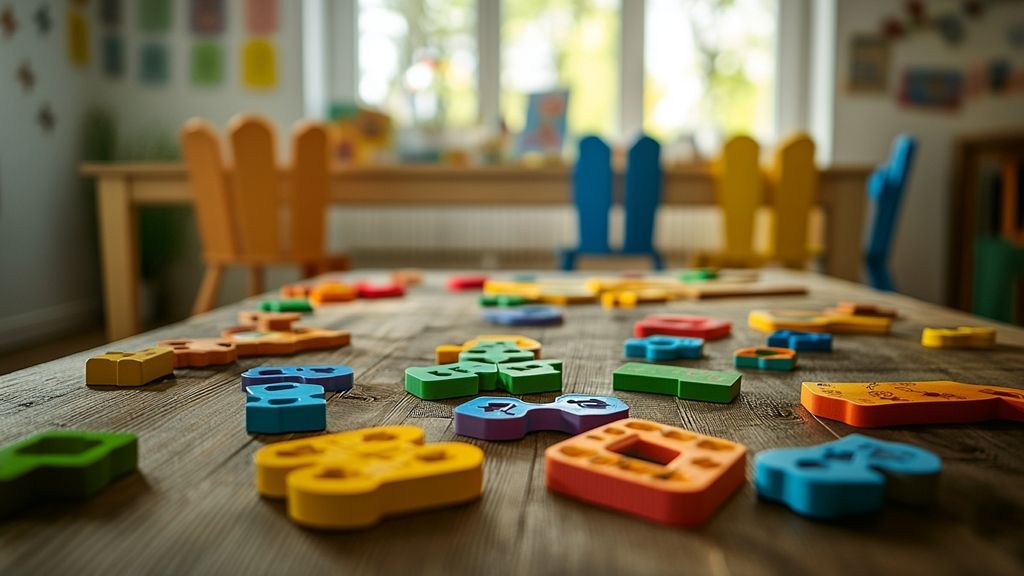
To create an effective mathematics learning workshop, it is important to choose a dedicated space. Ideally, this space should be quiet and free from distractions, allowing children to focus entirely on the activities offered. Set up this space in a welcoming manner with tables, comfortable chairs, and a board to visualize math concepts. Remember to include colorful and playful elements to awaken children’s interest.
Choose fun activities
Fun activities are essential for maintaining children’s enthusiasm. Here are some ideas:
Use board games
Board games like bingo operations or card games are excellent ways to learn mathematics. They allow teaching addition, subtraction, and even basic probability concepts in a fun way. By playing, children can acquire math skills without even realizing it.
Incorporate DIY activities
DIY can also be a great way to learn. For example, by building geometric shapes with recycled materials, children can explore concepts like symmetry and properties of figures. This makes learning interactive and tangible.
Encourage the use of digital tools
In the digital age, there are many online resources that facilitate learning mathematics. Applications and educational platforms offer paths tailored for children, allowing them to practice at their own pace. This serves as an ideal complement to traditional learning by offering a different and engaging approach. Tools like Mathia, which offers customized activities, can be very helpful.
Integrate mathematics into daily life
Mathematics is present in all aspects of daily life. By incorporating math activities into everyday tasks, such as cooking together or grocery shopping, you can teach children valuable lessons about measurements, quantities, or budgets. For example, asking children to measure ingredients while cooking helps them grasp concepts of weight and volume.
Create a math library
Having a math library at home exposes children to various books about mathematics. Illustrated books, novels, and math games will enrich their understanding. By reading them stories where mathematics plays a central role, parents can also enhance children’s interest in this discipline.
Foster a supportive environment
Finally, it is essential to create a supportive environment where children feel safe to ask questions and try without fear of making mistakes. Parents should encourage their children, praise their efforts, and celebrate their successes, big or small. This will help develop their self-confidence and motivation to explore the world of mathematics further.
To further this learning process, it is also possible to explore concepts such as sustainable housing. By informing yourself about the impacts of solar energy, you can help your children understand the mathematics behind contemporary topics. You can find interesting resources on this subject at this site.
Mathematics learning workshop at home
| Activity | Objective |
| Play bingo operations | Reinforce calculation skills while having fun. |
| Cooking | Learn measurements and quantities in a tangible way. |
| Create a math garden | Use nature to explore shape and symmetry concepts. |
| Use dice for games | Introduce basic operations through play. |
| Read math books | Develop curiosity and interest in the world of mathematics. |
| DIY activities | Learn to measure and understand angles and volumes. |
| Organize a grocery store role play | Practice addition and subtraction in a real-life context. |
| Go on math walks | Explore geometric concepts in the everyday environment. |
In the current context, it is becoming essential to promote learning in mathematics at home. Creating a mathematics learning workshop can not only stimulate your children’s interest in this subject but also make learning both fun and interactive. In this article, we will explore some ideas to set up such a workshop by integrating games and hands-on activities.
Choose a dedicated space
The first step in establishing a mathematics learning workshop is to choose an appropriate space in your home. Whether it’s a table in the living room or a corner of a bedroom, the important thing is that this space is quiet, well-lit, and conducive to concentration. Ensure that the necessary materials are within reach, including paper, pencils, educational games, and other mathematics tools.
Various materials and resources
To make the workshop appealing, it is recommended to include a variety of materials. Board games that involve mathematics, dice, cards, or even online educational applications can be valuable allies. For example, games like the bingo of operations or role play such as “the grocer” can provide ideal opportunities to practice arithmetic operations while having fun. You can also check out online resources, like this, for additional ideas.
Active learning through play
Incorporating play is an effective way to encourage learning. Organize fun activities like “Fast Rabbit”, where children must solve math problems to advance. This brings an interactive dimension to learning, limiting the boredom often associated with studying mathematics. While playing, they learn without even realizing it!
Engagement in daily tasks
Mathematics is not limited to paper exercises. Involve your children in daily tasks where mathematics is present. For example, when it comes to cooking, ask them to measure ingredients or divide the recipe to adjust portions. This allows them to see the usefulness of mathematics in practical situations and reinforces their understanding.
Observation and evaluation of progress
It is also important to observe and note your children’s progress as they participate in activities. This can be done simply by taking notes on their performances during games or conducting informal evaluations. By celebrating their successes, even the smallest ones, you reinforce their confidence and motivation to continue learning.
- Use board games: Incorporate games like bingo operations to make mathematics fun.
- Involve cooking: Learn to measure and weigh ingredients for a practical approach to mathematics.
- Embrace DIY: Create craft projects that require calculating dimensions and quantities.
- Read math books: Select stories that integrate math concepts to stimulate interest and curiosity.
- Organize a treasure hunt: Design puzzles based on mathematics to make learning active and engaging.
Organizing a mathematics learning workshop at home is an excellent way to instill essential skills while having fun. Whether through games, fun activities, or creative projects, there are multiple approaches to make learning mathematics both entertaining and enriching. This article offers ideas and practical tips for creating a conducive environment for mathematical learning at home.
Set up a dedicated space
First of all, it is crucial to have a space specifically dedicated to the workshop. This environment should be calm, well-lit, and equipped with all the necessary materials. Provide a table where children can manipulate objects, draw, and solve problems. Having crayons, paper, dice, and card games at hand can also be very beneficial to encourage active learning.
Use diverse resources
To maintain children’s interest, diversify the resources used. Employ mathematics books, interactive educational games, and digital applications that focus on the fundamentals. Some applications are designed to make learning mathematics engaging through quizzes and challenges suited to different learning levels.
Integrate mathematics into daily activities
An effective way to teach mathematics is to integrate it into daily activities. When cooking, for example, ask the children to measure the ingredients. This will allow them to understand the concepts of quantity, measurement, and fractions. Similarly, during visits to the market or supermarket, encourage them to calculate prices, compare quantities, or find special offers.
Use interactive games
Games are an excellent method to make learning mathematics more fun. Board games like bingo operations or the grocer can help reinforce calculation skills. These games promote interaction and offer a friendly approach that aids in memorizing and understanding math concepts without pressure.
Encourage DIY and creativity
DIY is another fun way to introduce mathematical concepts. For example, by building geometric figures or models using recycled materials, children can explore the properties of shapes while developing their problem-solving skills. Creating charts or maps can also help children visualize data in practical ways.
Explore with thematic projects
Propose thematic projects that combine mathematics and creativity. For instance, you could encourage them to create a garden and calculate the necessary space, or to conduct a survey on distances traveled during walks. Projects like these give a concrete sense to learning, allowing children to see the usefulness of mathematics in the world around them.
Assess and celebrate progress
Finally, it is essential to regularly assess progress while celebrating each small victory. To do this, you could set up a “success” board where children can display their achievements and realize their progression. By using small rewards, you can reinforce their motivation and engagement regarding the learning of mathematics.
FAQ: Creating a mathematics learning workshop at home
Q: Why is it important to create a mathematics learning workshop at home? Having a dedicated space for mathematics learning stimulates children’s interest and facilitates their concentration on math activities.
Q: How to arrange a space for math work at home? It is advisable to choose a quiet, well-lit place and equip it with all necessary materials, such as books, educational games, and DIY materials.
Q: What math activities can I propose to children? You can organize games like bingo operations, calculation challenges, or even DIY projects that incorporate geometry concepts.
Q: How to make learning mathematics fun? By integrating fun elements such as board games, manipulating objects, and interactive challenges that encourage active participation from children.
Q: Is it possible to integrate mathematics into other daily activities? Yes, you can involve children in cooking, gardening, or shopping activities to address math concepts such as measuring, counting, or operations.
Q: What types of materials are recommended for a mathematics learning workshop? Dice, cards, calculators, and visual aids can be very useful to make learning more interactive.
Q: How much time should I dedicate to this workshop per week? Ideally, dedicating about 30 to 60 minutes per day can be beneficial, depending on the child’s age and interest.
Q: What resources can I use to enrich the workshop? Books, educational applications, and websites can provide additional exercises and ideas for activities.
Q: How can I assess my child’s progress in this workshop? You can use regular assessments, informal feedback, and observe their engagement in activities.