|
IN SHORT
|
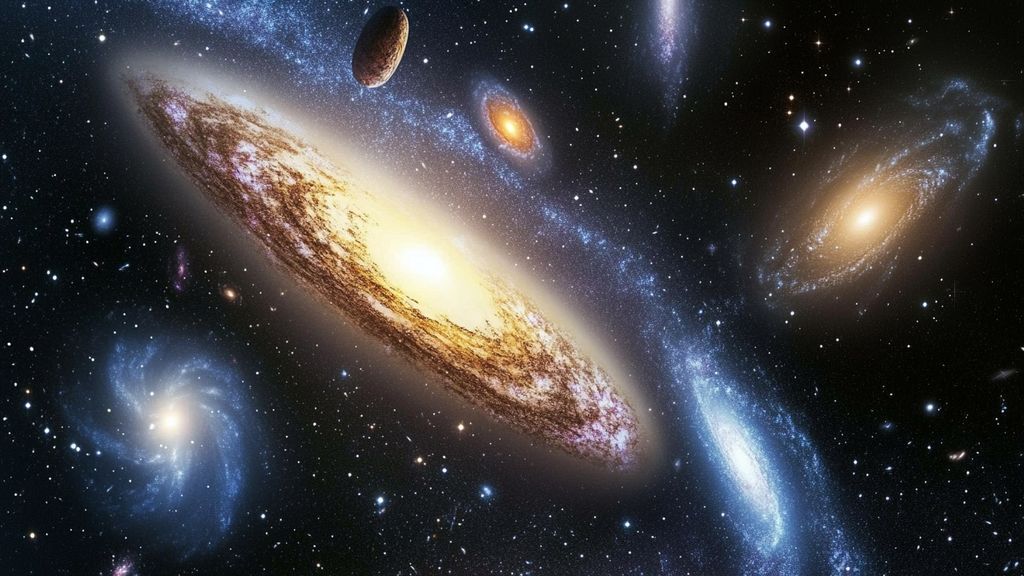
The interactions between galaxies represent a captivating phenomenon of the universe, where massive and majestic entities cross paths and sometimes merge. These events, far from being chaotic disasters, are actually moments of transformation and rebirth. When two galaxies come into contact, they generate gravitational instabilities resulting in the formation of new spiral arms and fascinating structures. Galactic collisions are not just a matter of destruction; they also trigger spectacular reactions, such as the activation of supermassive black holes and the creation of vast stellar clouds. Yet, these encounters occur on such long timescales that one might almost attribute to them a poetic beauty, making each merger a crucial step in the evolution of galaxies.
The interactions between galaxies are fascinating phenomena that plunge our understanding of the universe into labyrinths of complexity and wonder. When two galaxies come close to each other, they may either collide or even merge. These events bring about astounding consequences for both the galaxies themselves and their environment. This article explores the different aspects of these interactions, the underlying mechanisms, and their impacts on a cosmic scale.
What Galactic Interactions Are
The interactions between galaxies are mainly due to the effect of gravity, a force that disturbs the trajectories and shapes of the galaxies involved. When two galaxies enter each other’s gravitational field, they can either pass by each other or merge. Galaxies are not isolated entities; they generally exist in groups or clusters, which increases the likelihood of frequent interactions over time.
Collisions: A Common Phenomenon
Contrary to popular belief, the collision of two galaxies does not often lead to total destruction. In reality, the distance between the stars is so vast that the probability of them colliding is extremely low. Instead, the galaxies may pass by each other, creating deformations in their spiral or elliptical structures. These deformations can lead to more pronounced spiral arms or bars in the morphology of the galaxies, a phenomenon conducive to the formation of new stars.
Galactic Mergers: From Transformation to Creation
Galactic mergers, on the other hand, can be numerous and dramatic events. When two larger galaxies come into contact, they may attract each other and eventually merge to form a single massive galaxy. This process is often accompanied by intense activity in the central regions of the galaxies, where supermassive black holes can awaken and absorb vast amounts of stars and gas. Mergers can also generate superwinds that expel material, influencing star formation and altering the galactic ecosystem. Thus, the newly formed galaxy produces a myriad of stars, illustrating how these events can stimulate creation rather than destruction.
The Consequences of Interactions on Galaxy Evolution
The interactions between galaxies have a significant impact on their evolution. Due to gravitational effects, galaxies can undergo significant changes in their structures, which involves a redistribution of matter and a renewed internal dynamic. For example, the Milky Way, our own galaxy, is on a collision course with the Andromeda galaxy in about 4.5 billion years. This process highlights that even the largest galaxies are not immune to the transformations induced by their interactions.
The Implications of These Phenomena on a Cosmic Scale
On a larger scale, the collisions and mergers of galaxies play a crucial role in the dynamics of the universe. By their very nature, these interactions contribute to the growth of galaxies and their diversity. By bringing together different populations of stars, gas, and dust, they stimulate the formation of varied chemical elements and enrich the intergalactic medium. These processes are essential for our understanding of the formation and evolution of the universe. To better grasp these principles, you will find more information on the application of mathematics in daily life.
Conclusion on Interactions
The interactions between galaxies, whether through collisions or mergers, offer us a fascinating perspective on the dynamic processes that shape our universe. These events, far from being mere catastrophes, are engines of galactic evolution, creating new stellar formations and radically altering the galaxies involved. In this way, these phenomena testify to the beauty and complexity of our cosmos.
Interactions Between Galaxies: Collisions and Mergers
| Type of Interaction | Description |
| Collision | Two galaxies come closer together and interact gravitationally, leading to deformation of their structures. |
| Merger | The galaxies combine to form a new entity, often enriched with stars and matter. |
| Effects on Stars | Stars may change trajectory, but most often, they do not collide. |
| Supermassive Black Hole | Black holes can merge, generating detectable gravitational waves. |
| Formation of Spiral Arms | Interactions can provoke the appearance of spiral arms in galaxies. |
| Tidal Bridge | Filaments of matter can stretch between galaxies during interactions. |
| Galactic Evolution | Galactic interactions are essential for the growth and evolution of galaxies. |
The interactions between galaxies are a fascinating phenomenon that shapes the cosmos. As they cross paths, these vast stellar structures can collide or merge, leading to a series of astounding astronomical events. Amid the turbulence, newborn stars emerge, and the supermassive black holes at the center of each galaxy awaken. Let us discover together what this truly means for our universe.
The Nature of Galactic Collisions
Contrary to how we often envision collisions as disasters, the encounter of two galaxies does not result in total destruction. In fact, collisions between galaxies are brilliant and dynamic events, often resulting in a reorganization of stars and stellar systems. When two galaxies come close, they exert strong gravitational forces on each other, which can create spiral arms and generate bridges of matter between them.
Galactic Mergers: A Cosmic Ballet
Galactic mergers represent a moment of transformation. As they travel through the vastness of space, two galaxies may unite, sacrificing their initial shape to give rise to a merged galaxy. This process results in the fusion of their components, leading to the formation of new stars, often at a rapid pace. It is also observed that the supermassive black holes, central to each galaxy, combine to form an even more powerful black hole.
The Impact of Interactions on Galaxy Evolution
Galactic interactions are not just impressive visual spectacles; they play a crucial role in the evolution of galaxies. These events can influence the lifecycle of stars and participate in the accumulation of matter. During these collisions, parts of the galaxies may be torn away, leading to the creation of new star families in the universe. A multitude of stars can illuminate the sky, revealing the mystical forces that govern our cosmos.
Observing Mergers and Collisions Over Time
Scientists use advanced telescopes to observe these major events. Using tools like the Hubble telescope, they are able to capture incredible images of interacting galaxies billions of light-years away. The Antenna Galaxy and the potential collision of the Milky Way with the Andromeda galaxy are emblematic examples illustrating the incredible spectacle of galactic mergers.
An Invitation to Understand Our Universe
The interactions between galaxies invite exploration and understanding of the mysteries of our universe. They remind us that, despite their distance, these vast stellar systems are in perpetual transformation. To learn more about the forces that shape our cosmos, feel free to check out these fascinating resources on the history of physics or practical advice for password management. This knowledge can enrich our appreciation of the world around us as well as the magnificent universe in which we live.
- Galaxy Collisions: Encounters due to gravitational fields.
- Galactic Mergers: Transformation of structures through interaction.
- Star Formation: Increased star formation during collisions.
- Supermassive Black Holes: Increased activity during mergers.
- Spiral Arms: Formation and maintenance through gravitational instabilities.
- Interacting Galaxies: Exchanges of matter and changes in orbits.
- Tidal Bridges: Flows of gas connecting galaxies in interaction.
- Andromeda Galaxy: Famous example approaching collision with the Milky Way.
- Cosmic Chaos: Energies released during these events.
- Galactic Evolution: Growth process through multiple interactions.
Introduction to Interactions Between Galaxies
The interactions between galaxies, particularly collisions and mergers, are fascinating events in the universe. Contrary to what one might imagine, these encounters do not result in disasters but rather in complex dynamics and spectacular evolutions. During these interactions, gravitational fields are disturbed and lead to significant transformations within the concerned galaxies, often conducive to the formation of new stellar structures.
The Characteristics of Galactic Collisions
Galactic collisions manifest when two galaxies approach each other closely enough for their gravitational field to impact their structure. During these encounters, the fusion of gas and dust causes the formation of spiral arms and new stars. Instead of causing massive destruction, these interactions create a dynamic environment in which stellar activity is intensified. Indeed, the high-density areas generated favor the birth of new stars, thus stimulating the evolution of galaxies.
The Fusion of Galaxies: A Common Phenomenon
The fusion of galaxies is a process in which many galaxies have already participated. In our Milky Way, this merger is expected with the Andromeda galaxy in a few billion years. This type of interaction can lead to a significant transformation of galactic morphology. During the merger, the galaxies intertwine, allowing their material content to be chaotically redistributed. The supermassive black holes, often present at the center of galaxies, can also play a vital role, as their activity can intensify stellar formation phenomena.
The Impacts of Interactions on Star Formation
The interactions between galaxies are a catalyst for star formation. The gravitational forces generated by the collision of galaxies lead to gravitational instabilities. These are often responsible for compressing the intergalactic gas, thus increasing local density. This concentration of matter can trigger stellar formation bursts, where thousands of stars are born in a very short time. Furthermore, interaction events can also participate in the evolution of galaxies through materials exchanged between them, thus increasing their mass and complexity.
The Effect of Interactions on Galaxies on a Large Scale
On a larger scale, interactions between galaxies reshape the observable universe. Galaxy clusters also undergo these phenomena, influencing gravitational dynamics on a large scale. These collisions can provoke the formation of galaxy clusters and play an important role in the structuring of the universe as we know it. This process highlights the fact that galaxies are not isolated, but interconnected through inherent gravitational networks.
Conclusion on the Importance of Galactic Collisions and Mergers
Collisions and mergers of galaxies are not just impressive spectacles to observe; they are at the heart of cosmic evolution. These interactions energize galaxies and enrich the diversity of observable structures in the universe. The study of these phenomena is essential for understanding how galaxies take shape and evolve over time.
FAQ on Interactions Between Galaxies: Collisions and Mergers
What is an interaction between galaxies? An interaction between galaxies refers to when two galaxies undergo a gravitational disturbance on each other, altering their shape and respective dynamics.
Are galaxy collisions dangerous? Contrary to what one might think, the collision of two galaxies does not cause a cosmic catastrophe, as the distance between stars is so great that individual star collisions are rare.
What happens when two galaxies merge? When two galaxies merge, fascinating events such as the activation of the supermassive black holes located at their center and the creation of many new stellar systems result.
What are the effects of interactions between galaxies on their structure? Gravitational interactions can generate instabilities favorable to the formation of spiral arms and other distinct galactic structures.
Has the Milky Way ever interacted with other galaxies? Yes, like many galaxies, the Milky Way has a history of galactic interactions, and it is on the verge of merging with the Andromeda galaxy in a few billion years.
What are the characteristics of interacting galaxies? Interacting galaxies may exhibit tidal arms, bridges of matter, and other elements that testify to their history of gravitational contact.
Can galaxy collisions create new stars? Yes, galaxy collisions and mergers are often accompanied by intense star formation, fueled by the hydrogen bursts and the energy released during these events.
How frequent are galaxy collisions in the universe? Galaxy collisions are relatively frequent and are an integral part of the galactic growth process, representing a natural event in the evolution of galaxies.