|
IN BRIEF
|
The Apollo missions represent a true historical turning point in space exploration. Initiated by NASA in the 1960s, this ambitious program allowed the United States to achieve the monumental feat of sending astronauts to the Moon. Among these missions, Apollo 11 stands out particularly, marking the first step of humanity on another celestial body on July 21, 1969. This project was not limited to a scientific adventure, but it also had profound implications in technological, political, and cultural fields, redefining our understanding of the universe. By studying lunar rocks and conducting experiments in extraterrestrial environments, the Apollo missions paved the way for numerous innovations and sparked unprecedented interest in astronomy and space exploration.
The Apollo missions marked a historical turning point in space exploration, making the United States the first to set foot on the Moon. This program, emblematic of the space conquest, not only demonstrated human and technological capabilities but also opened the door to significant advances in various scientific fields. In this article, we will explore the impact of the Apollo missions, their development, and their legacy in the history of humanity.
The Apollo program: origins and objectives
The Apollo program was launched by NASA in 1961 in a climate of intense rivalry between the United States and the Soviet Union during the Cold War. The main objective was to send astronauts to the Moon and bring them back safely to Earth. To achieve this, NASA implemented a series of missions that began with uncrewed flights allowing for the testing of the Saturn V launcher, designed by the famous engineer Werner Von Braun.
Key steps of the Apollo missions
The Apollo program experienced significant milestones that led to its historic realization. The Apollo 8 mission was the first to send astronauts into lunar orbit, paving the way for the Apollo 11 mission, during which Neil Armstrong and Buzz Aldrin made the first steps of humanity on the Moon on July 21, 1969. This memorable event was followed by a return to Earth that was met with immense global enthusiasm.
The Apollo missions: a technological feat
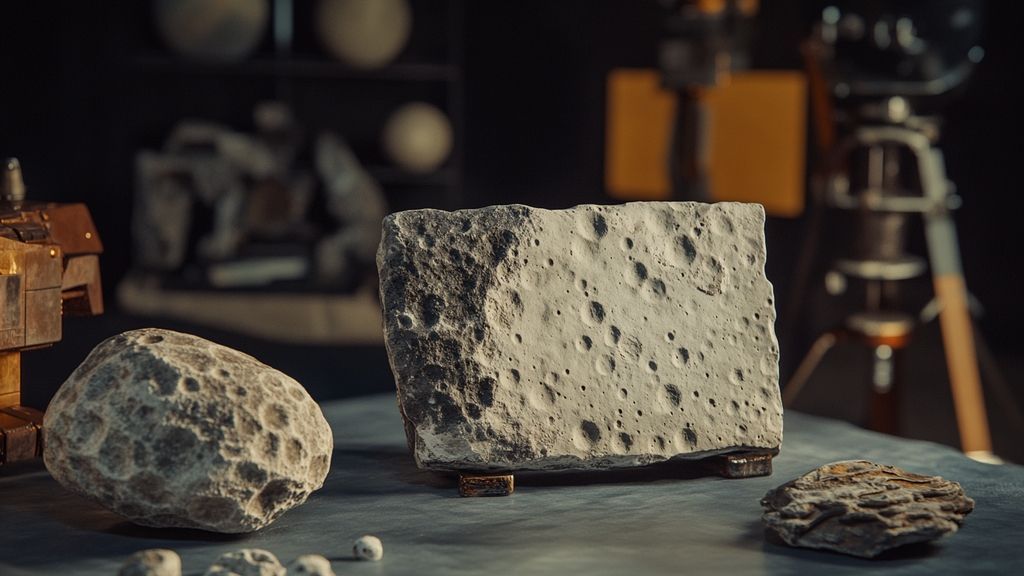
The Apollo missions were not only an engineering feat, but they also represented a giant technological leap on Earth. The astronauts faced geological challenges by drilling into the lunar soil to collect rock samples, thus revealing treasures of knowledge about our natural satellite and its history.
The socio-cultural impact of the Apollo missions
Beyond technology, the Apollo missions had a tremendous impact on society. They generated unprecedented interest in astronomy, engineering, and science in general. Millions of people followed the missions on television, inspiring a new generation of scientists, engineers, and explorers.
A lasting legacy
The Apollo missions left a lasting legacy not only in the field of space exploration but also in education and scientific research. Thanks to the lunar samples brought back, essential discoveries were made, influencing our understanding of the solar system. Furthermore, the program proved that space exploration was possible and paved the way for future missions, current and upcoming.
Conclusion of the Apollo missions
Although the Apollo program ended in 1975, its impact is still felt today. The Apollo missions were not only a monumental accomplishment for humanity but also set a standard for future space exploration, proving that the limits of our planet can be pushed through innovation and human unity.
| Apollo Missions | Impact |
| Apollo 1 | Tragic fire leading to safety reforms |
| Apollo 8 | First mission to orbit the Moon |
| Apollo 10 | Rehearsal mission for Apollo 11, testing procedures |
| Apollo 11 | First steps of humanity on the Moon, a historic feat |
| Apollo 12 | Improvement of landing and exploration techniques |
| Apollo 13 | Partial failure turned into a heroic rescue mission |
| Apollo 14 | Reintroduction of scientific exploration on the Moon |
| Apollo 15 | First mission with the lunar rover, in-depth exploration |
| Apollo 16 | Study of southern lunar regions, geological advancements |
| Apollo 17 | Last lunar mission focusing on scientific research |
The Apollo missions constituted an unmissable chapter in the history of space exploration. Initiated by NASA, these missions allowed humanity to realize its dream of walking on lunar soil. The Apollo program, which spanned from 1961 to 1975, marked major technological breakthroughs and paved the way for new scientific victories.
The Apollo program: a human and technological adventure
The Apollo program began with several uncrewed flights that tested the Saturn V launcher, a remarkable vehicle designed by engineer Werner Von Braun. These initial flights ensured the safety and effectiveness of upcoming crewed missions. The Apollo missions were not only space explorations, but also technical challenges that propelled science and innovation.
Apollo 11: The first step of humanity on the Moon
The culmination of this program remains without a doubt the Apollo 11 mission, which succeeded in landing the first humans on the Moon on July 21, 1969. Neil Armstrong and Buzz Aldrin took historic steps, carrying with them the hope and dream of an entire generation. This event was followed by millions of viewers around the world, confirming the immeasurable impact of this space conquest.
The scientific contributions of the Apollo missions
The Apollo flights were not merely symbolic acts. They also had significant geological objectives. Astronauts drilled into the lunar soil to recover rock samples up to three meters deep, providing valuable data for our understanding of the Moon and, by extension, the origins of our solar system. These samples enriched our understanding of the formation of celestial bodies.
The challenges of the Apollo missions
It is essential to recognize that the Apollo program was not without difficulties. Tragic incidents, such as the explosion of the Apollo 1 mission, highlighted the inherent risks of space exploration. Despite the obstacles, NASA’s and the astronauts’ determination made it possible for the mission to rebound, reflecting the collective commitment to exploration.
The legacy of the Apollo program
The Apollo missions left a lasting legacy in various fields, from astronomy to engineering. They generated a genuine enthusiasm for space and inspired generations of scientists and engineers. The advancements made during this period continue to influence contemporary space missions while feeding our inherent curiosity about the universe around us.
- 1961 : Start of the Apollo program, aiming to send astronauts to the Moon.
- Saturn V : Launcher developed by Werner Von Braun, essential for lunar missions.
- Apollo 8 : First crewed mission to orbit the Moon in 1968.
- July 21, 1969 : Neil Armstrong and Buzz Aldrin take the first lunar steps during Apollo 11.
- 22 kg : Amount of lunar rocks brought back to Earth by the Apollo 11 crew.
- Apollo 13 : Famous mission for its malfunction, illustrating the resilience of astronauts and ground teams.
- Duration of the program : 1961 to 1972, with a total of 17 missions, marking the peak of space exploration.
- Apollo 1 : Tragically known for the accident that claimed the lives of three astronauts.
- Technological impact : The Apollo missions led to significant technological developments on Earth.
- Symbolic : The Apollo missions represented a human feat that transcended political and cultural boundaries.
The Apollo program represents a landmark chapter in the history of space conquest. Initiated by NASA in the 1960s, it allowed humanity to achieve unprecedented scientific and technological feats, notably with the famous Apollo 11 mission, during which astronauts first set foot on the lunar surface. This article examines the various Apollo missions and their impact, both on science and society.
The Apollo program: a bold ambition
NASA launched the Apollo program in 1961 with the ambitious goal of sending humans to the Moon and bringing them back safely. This program underwent a series of missions, both crewed and uncrewed, aimed at testing the capabilities of the Saturn V launcher and preparing for the first lunar landing. The impetus behind this project was also political, with competition against the Soviet Union galvanizing American efforts in space exploration.
Apollo 11: a giant leap for humanity
The Apollo 11 mission, launched on July 16, 1969, marked a major turning point in the history of space exploration. For the first time, astronauts Neil Armstrong and Buzz Aldrin set foot on the lunar surface on July 21, 1969. These historic moments were followed by millions across the globe, uniting humanity in a shared awe. The astronauts conducted scientific experiments and collected rock samples, bringing back nearly 22 kg of lunar materials.
The prior missions
Before Apollo 11, several missions were essential for the success of this endeavor. Projects like Apollo 8, which placed astronauts in lunar orbit, were crucial for testing the systems and techniques necessary for landing. Apollo 9 and Apollo 10 also played key roles by testing the lunar module and by carrying out approach passages around the Moon, respectively.
The challenges and failures
However, the path to the Moon was not without obstacles. Tragic missions like Apollo 1, where a fire caused the loss of three astronauts during a ground test, highlighted the dangers of space exploration. Additionally, Apollo 13 raised the technical challenges that astronauts may face, showcasing ingenuity and collaboration to safely return to Earth after a malfunction.
The legacy of the Apollo missions
The Apollo missions had an immeasurable impact on science and technology. They inspired generations of engineers and scientists, shaping technological development in the United States and around the world. Research on lunar samples deepened our knowledge of the Moon’s formation and that of planets, as well as the origin of the solar system.
A momentum for the future of space exploration
Moreover, the Apollo missions clearly paved the way for future projects, particularly those focused on exoplanets and the search for life beyond our Earth. Today, space exploration continues to evolve, inspired by the legacy of Apollo to envision new destinations, such as Mars and beyond.
FAQ about the Apollo missions
What is the Apollo program? The Apollo program is a series of space missions conducted by NASA between 1961 and 1972, aimed at sending astronauts to the Moon and returning them safely to Earth.
When did the Apollo 11 mission take place? The Apollo 11 mission took place from July 16 to July 24, 1969, marking a historic moment when astronauts Neil Armstrong and Buzz Aldrin took their first steps on the Moon.
What was the main objective of the Apollo 11 mission? The main objective of the Apollo 11 mission was to successfully execute the first human lunar landing and bring back samples from the lunar surface.
Who were the astronauts of the Apollo 11 mission? The astronauts of the Apollo 11 mission were Neil Armstrong, Buzz Aldrin, and Michael Collins.
Why is the Apollo 11 mission so significant? The Apollo 11 mission is significant because it marked the first step of humanity on another celestial body, symbolizing a tremendous leap in space conquest and technological progress.
What other missions were part of the Apollo program? The Apollo program included a total of 17 missions, among which Apollo 8 was the first crewed mission to orbit the Moon.
What happened to the rock samples brought back by Apollo 11? The rock samples brought back by Apollo 11 are preserved and studied in various laboratories, providing valuable information about the composition of the Moon and its geological history.
What were the main technological advancements of the Apollo program? The Apollo program led to numerous technological advancements, particularly in the fields of computing, aerospace engineering, and communications, having a major impact on other sectors.
What was the political significance of the Apollo missions? The Apollo missions had a strong political significance, especially during the Cold War, with NASA and the United States seeking to demonstrate their technological superiority over the Soviet Union.
What was the Apollo 13 mission? Apollo 13 was a mission that encountered major technical problems, preventing the planned lunar landing, but the crew managed to return safely to Earth thanks to effective crisis management.