|
IN BRIEF
|
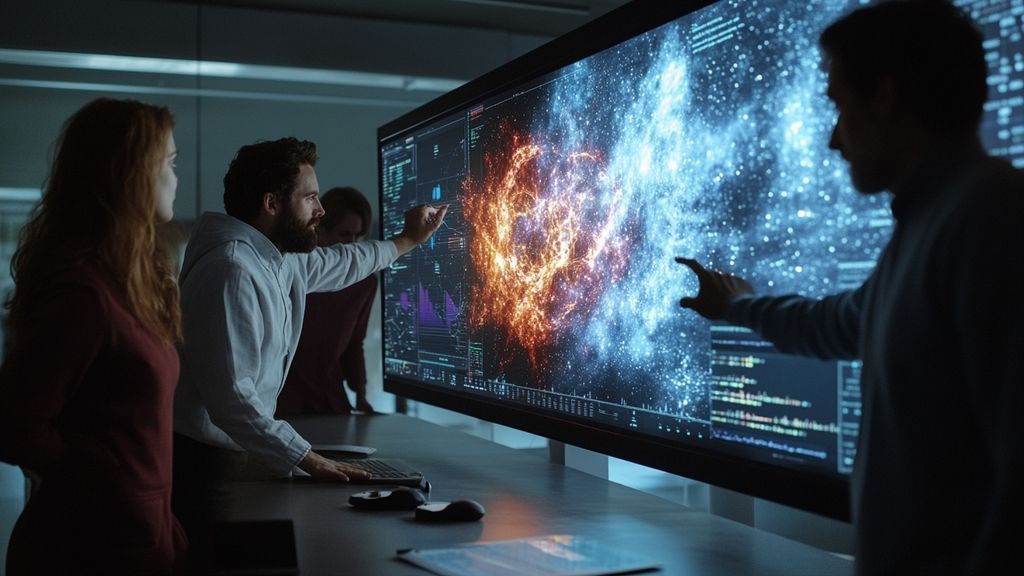
Supercomputers play a crucial role in the field of astrophysics, enabling scientists to conduct advanced research and perform complex simulations. Thanks to their exceptional computing power, these machines are capable of processing vast datasets and modeling celestial phenomena with unprecedented accuracy. Ambitious projects, such as those conducted by the Frontier supercomputer, open new perspectives for understanding the universe, while initiatives like Jean Zay in France enhance researchers’ ability to explore fundamental questions, such as galaxy formation or the search for exoplanets that could harbor life. In this scientific adventure, supercomputers stand as indispensable allies, offering powerful tools to unveil the mysteries of our cosmos.
Supercomputers play a crucial role in the field of astrophysics, allowing scientists to simulate complex celestial phenomena, analyze massive data, and explore new frontiers of understanding of the universe. With these incredibly powerful machines, researchers can model the evolution of galaxies, study star formation, and even search for exoplanets capable of supporting life.
The Power of Supercomputers
Supercomputers are defined by their ability to perform a colossal number of calculations per second, which makes them essential for processing the vast datasets generated by astrophysics. For example, the Frontier supercomputer recently orchestrated the largest astrophysical simulation to date, opening new perspectives in the study of galaxies and their dynamics.
Main Applications in Astrophysics
These machines are used in various fields of astrophysics, including modeling star formations, simulating extreme cosmological events such as supernovae explosions, and analyzing dark matter and dark energy. Each simulation provides a better understanding of the mechanisms at work in the universe and tests our theories against observed events.
Iconic Supercomputers
Among the most powerful supercomputers in the world, the Jean Zay in France stands out for its capacity to process enormous volumes of data. It is designed to meet the varied needs of researchers across several disciplines, including astrophysics. But that’s not all, the Summit supercomputer is capable of performing 200 quadrillion calculations per second, representing a major advancement for scientific research.
Collaboration Between Researchers and Cutting-Edge Technologies
Collaborations between researchers and engineers in the development of supercomputers are essential. These partnerships optimize the performance of these machines by integrating advanced technologies like artificial intelligence. This is the case with the Perlmutter supercomputer, which focuses in particular on creating a 3D map of the universe, an ambitious project that could transform our understanding of cosmic structures.
Challenges and Future Perspectives
Despite their phenomenal capabilities, supercomputers face significant challenges, particularly regarding electricity consumption management and the need for continuous innovation to meet the growing scientific demands. Advances in the field of quantum supercomputers could provide solutions to current limitations and revolutionize our approach to astrophysics.
Research and innovation in the field of supercomputers will undoubtedly continue to play a fundamental role in advancing our knowledge of astrophysics, bringing us closer to a complete understanding of the mysteries of the universe.
| Supercomputer | Applications in Astrophysics |
| Frontier | Large-scale astrophysical simulation to study cosmic phenomena. |
| Pleiades | Used by NASA for complex calculations related to spacecraft design. |
| Frontera | Algorithm development for research on exoplanets. |
| Jean Zay | Supports large-scale simulations for mapping the universe. |
| Summit | Calculations on star formation and other astronomical objects. |
| Perlmutter | Helps establish cosmology models and analyze telescope data. |
| Gordon Bell | Studies on black holes and their impact on galaxy evolution. |
| SuperMUC | Analysis of astrophysical data for international projects. |
| Titan | Applications in simulating planetary atmospheres and habitability conditions. |
In a world where the quest for space exploration and understanding the mechanisms of the universe is increasingly crucial, supercomputers prove to be indispensable tools. With their impressive computing capabilities, these giants of computing enable astrophysicists to conduct complex simulations, analyze massive astronomical data, and study phenomena that challenge our understanding.
Unequalled Computing Power
Supercomputers are designed to execute an incredible number of operations per second. For instance, the Summit supercomputer can perform 200 quadrillion calculations per second. This power offers researchers the ability to model astrophysical events and study the interactions between the various forces governing the universe.
Large-Scale Astrophysical Simulation
Recently, thanks to the technology of the Frontier supercomputer, a team of researchers successfully conducted the largest astrophysical simulation to date. These simulations allow for the exploration of fundamental questions such as galaxy formation, star evolution, and even the search for potentially habitable planets.
Supercomputers at the Heart of Research
Supercomputers like Jean Zay and Pleiades represent the future of astrophysical research. By mobilizing thousands of calculation cores, these machines enable real-time data analysis, thereby facilitating the discovery of new celestial bodies and other space phenomena. Their ability to process vast amounts of data collected by telescopes and space missions is crucial for advancing science.
A Turning Point in Creating 3D Maps of the Universe
With the help of artificial intelligence, Nvidia’s Perlmutter supercomputer is set to create a 3D map of the universe with unprecedented accuracy. This ambitious project could revolutionize our understanding of the structure and evolution of the universe, revealing information about matter distribution as well as clues about the mysteries of dark energy and dark matter.
Supercomputers and the Future of Astrophysics
As technology progresses, the role of supercomputers in the field of astrophysics will only grow. From the discovery of new exoplanets to modeling the formation of universes, their impact on our understanding of the universe is truly invaluable. These powerful tools will continue to shape our future and inspire generations of scientists to come.
- Frontier Supercomputer – Enables the largest astrophysical simulation in history to date.
- Pleiades – NASA supercomputer used for advanced astrophysical calculations.
- Jean Zay – Principal supercomputer in France, contributing to various astrophysical research projects.
- Frontera – Used by researchers for complex astrophysics studies.
- Perlmutter – Supercomputer with AI aimed at creating 3D maps of the universe.
- Summit – Capable of performing fast calculations for simulating astrophysical phenomena.
- Observatory Computer Cluster – Combines 220 calculation cores for in-depth analyses.
Supercomputers play a crucial role in advancements in astrophysics, allowing scientists to model and simulate complex cosmic phenomena. With their exceptional processing power, these machines offer new insights into the universe, helping to unveil mysteries such as galaxy formation, potential exoplanets, and even the nature of dark matter. This article explores how supercomputers have become indispensable tools in astrophysical research.
Simulation of Cosmic Phenomena
The simulation of cosmic phenomena is one of the most common applications of supercomputers. With their ability to perform calculations at breakneck speed, they enable the creation of three-dimensional models of the universe. For example, the Frontera supercomputer has been used to carry out the largest simulation to date, revealing details about the dynamics of galaxies and gravitational interactions.
Understanding Galaxy Formation
The assembly of galaxies and their evolution are fundamental questions in astrophysics. Supercomputers, using sophisticated algorithms, can model millions of years of evolution in just a few days. These simulations help astrophysicists understand how matter aggregates under the influence of gravity and how galaxies interact with one another.
Exploration of Exoplanets
Another fascinating application of supercomputers is the study of exoplanets. With the rise of modern telescopes like the Hubble telescope, massive data is generated, requiring extreme computing capabilities to analyze and interpret this information. Supercomputers process this data to identify the characteristics of exoplanets, such as their atmospheres and their potential to support life.
Atmospheric Modeling
Modeling the atmospheres of exoplanets, thanks to supercomputers like Jean Zay, allows scientists to predict the presence of key molecules that could indicate the existence of life. By simulating the interactions between stellar light and the atmospheres of these planets, researchers can better understand the conditions necessary for life.
Analysis of Massive Data
Space missions generate enormous volumes of data. Supercomputers are essential for processing and analyzing this data. For instance, data provided by missions like the Kepler telescopes must be analyzed to detect weak signals that would indicate the presence of new exoplanets. Supercomputers, with their capacity to perform billions of operations per second, facilitate this search.
Artificial Intelligence in the Service of Astrophysics
By integrating artificial intelligence tools into the analysis processes, supercomputers improve the accuracy of astrophysical discoveries. For example, the Perlmutter supercomputer uses AI to help create 3D maps of the universe, making the task of spotting hidden structures much more efficient.
The power of supercomputers transforms the way scientists explore the universe. With these advanced technologies, new insights into galaxy formation, the exploration of exoplanets, and the analysis of massive data emerge, thus enhancing our understanding of astrophysics.
FAQ on Supercomputers in Astrophysics
What is a supercomputer? A supercomputer is an extremely powerful computer designed to perform a large number of calculations simultaneously at high speed. It is often used to solve complex problems requiring substantial computational power.
How are supercomputers used in astrophysics? Supercomputers are used in astrophysics to carry out complex simulations, model astrophysical phenomena such as galaxy formation, star evolution, and analyze data from telescopes.
What are some examples of powerful supercomputers? Among the most powerful supercomputers, there is Frontera, used in university research, and Summit, which can perform up to 200 quadrillion calculations per second.
What role does artificial intelligence play with supercomputers? Artificial intelligence enhances the capabilities of supercomputers by allowing for faster and more accurate analysis of data, helping in creating 3D maps of the universe or detecting signatures of life on exoplanets.
Are supercomputers expensive? Yes, supercomputers are costly investments, with some like Summit costing over $200 million, but their contribution to scientific research often justifies the expenditures.
How are the resources of supercomputers managed? The resources of supercomputers are managed to allow many researchers to use them. This often involves a time allocation for users to maximize their effectiveness.
Why are supercomputers essential for the future of astrophysics? Supercomputers are essential for analyzing the large amounts of data generated by space missions and telescopes, allowing scientists to make new discoveries and deepen our understanding of the universe.