|
IN BRIEF
|
Since the pioneering exploration of Mars with the Sojourner rover in 1997, martian robots have revolutionized our understanding of the red planet. Thanks to bold missions like Tianwen-1 and Perseverance, these sophisticated devices continue to unveil the mysteries of the Martian environment. By combining advanced technologies and robust engineering, rovers such as Curiosity, Spirit, and Opportunity have allowed us to explore the soil, analyze geology, and search for signs of extraterrestrial life. The advancements made in the design of these robots testify to our willingness to explore the unknown and enrich our quest for knowledge about our planetary neighbor.
Since the first exploration of the red planet, martian robots have played a crucial role in our quest for knowledge about Mars. Thanks to impressive technological innovations and bold missions, these rovers and landers have accumulated countless data on geology, climate, and even conditions conducive to life. This article highlights the technologies behind these incredible machines and the remarkable discoveries they have made.
A brief history of martian robots
The first steps of robots on Mars date back to July 1997 with the arrival of the Sojourner rover, which paved the way for many subsequent missions. Since then, several generations of rovers have emerged, including Spirit and Opportunity, launched in 2003, as well as Curiosity and Perseverance, which have extended our exploration. Each mission has been designed with specific objectives and has allowed for testing different technologies.
Technologies of martian robots
The technologies integrated into martian robots are at the forefront of innovation. They include robust electronic components capable of withstanding the extreme conditions of the Martian environment, such as freezing temperatures, dust storms, and cosmic radiation. The rovers are equipped with high-resolution cameras, spectrometers, and drills to analyze soil and rocks. These sophisticated instruments allow for capturing detailed images and providing valuable information about the composition of Martian materials.
Advancements in robotics
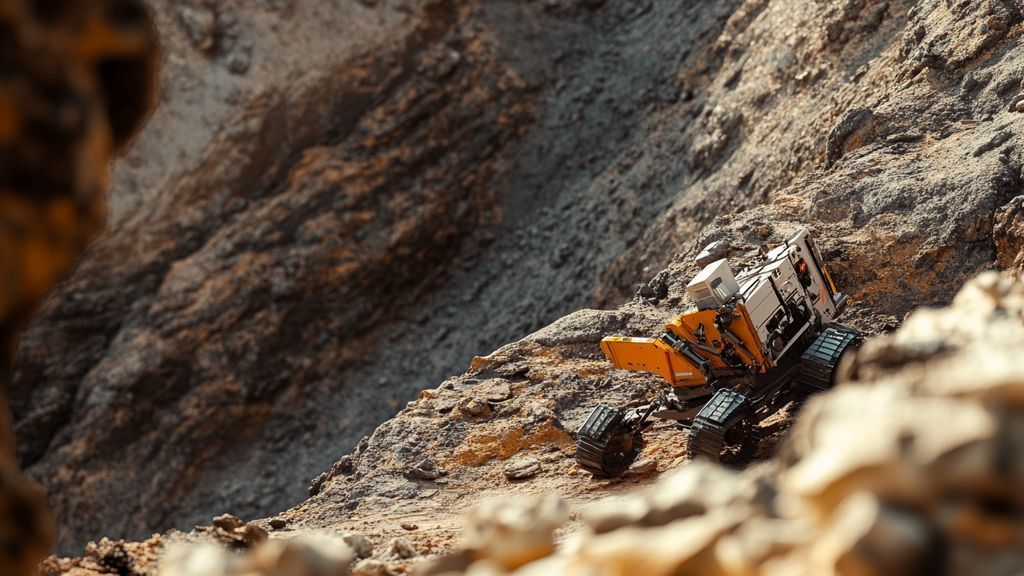
Advancements in robotics have also enabled complex maneuvers on Martian soil. The rovers are equipped with tracks that allow them to navigate rough terrain while maintaining balance. Thanks to artificial intelligence, these machines can even make autonomous decisions, such as avoiding obstacles or selecting points of interest for exploration.
Major discoveries of robotic missions
Martian missions have led to groundbreaking discoveries that have transformed our understanding of the planet. For example, the Curiosity rover confirmed the presence of water in the form of ice and revealed evidence of liquid water in the past. The Perseverance rover, on the other hand, aims to explore areas where microbial life may have existed. Its results could provide vital clues about the possibility of extraterrestrial life.
Soil and rock samples
Another significant advancement concerns sample collection. The rovers are capable of analyzing soil and rock samples in situ and storing them for future missions. The sample return program, which aims to bring these samples back to Earth, is one of the most exciting ongoing projects, promising new information about Martian geology.
Towards the future of Martian exploration
The next generation of martian robots will be even more advanced, with ambitious projects incorporating cutting-edge technologies. The possibility of sending drones to survey inaccessible terrain offers new perspectives for exploration. Each new mission brings us closer to a deeper understanding of Mars and its history, while nurturing our dream of a potential colonization of the planet.
Martian robots will undoubtedly continue to be pioneers on the path of discovery, revealing the mysteries of the red planet and helping us answer the fundamental question: has there ever been or will there ever be life on Mars?
| Robot | Technologies and discoveries |
| Sojourner | Pioneer of Martian exploration, demonstrated the feasibility of remote-control rover operation. |
| Spirit | Analysis of Martian geology and detection of minerals indicating ancient waters. |
| Opportunity | Discovery of rocks and soils that have been eroded by water, with a mission extended beyond expectations. |
| Curiosity | Equipped with analytical labs, confirmed the presence of chemical elements conducive to life. |
| Perseverance | Research on signs of past life and collection of samples for potential return to Earth. |
| Zhurong | Studies of Martian soil and detection of evidence related to ancient water fluctuations. |
Since the beginnings of space exploration, martian robots have played a crucial role in our understanding of the red planet. Thanks to bold missions and advanced technologies, these devices have collected valuable data on geology, atmosphere, and the potential for life on Mars. Recent additions to this fleet of robots, such as Perseverance and Zhurong, further strengthen our quest for knowledge.
Iconic missions
Martian rovers have experienced notable missions, starting with the famous Sojourner in 1997, which paved the way for deeper exploration. The Spirit and Opportunity missions, launched in 2004, allowed us to deepen our understanding of Martian geology and the water that may have existed in the past.
The Mars 2020 mission
The Mars 2020 mission, featuring the Perseverance rover, marked a major turning point. This robot is equipped with state-of-the-art scientific tools designed to analyze Martian soil and atmosphere. It explores craters that may have hosted microbial life and collects samples that may potentially be returned to Earth during future missions.
The technologies behind the robots
The technologies integrated into martian robots are fascinating. To cope with the hostile environment of Mars, each rover is designed with durable materials and autonomous power systems. They are equipped with cameras, spectrometers, and various instruments to perform in situ analyses.
Interface and navigation
Navigating on Martian soil is a challenge. The robots use advanced algorithms to move safely, while avoiding obstacles. Sophisticated communication systems allow them to transmit data and images back to Earth, bringing us closer to the mysteries of the red planet.
Significant discoveries
The discoveries made by martian robots have reshaped our understanding of the planet. Evidence of water, sedimentary layers, and past climatic conditions are all elements that draw our attention to the possibility that Mars may have supported life.
The search for signs of life
One of the main objectives of martian missions is the search for signs of life, past or present. The robots analyze rock and soil samples in the hope of finding biomolecules or microscopic organisms.
The impact on education and the future
Martian missions inspire young people around the world to take an interest in science. Through educational programs, this cutting-edge technology offers teaching tools that allow students to discover programming and robotics while exploring the universe.
- Pioneer Rovers: Sojourner, first robot on Mars (1997).
- Advanced Technology: Sensors to analyze soil composition.
- Recent Missions: Perseverance and Zhurong (2021), studies of habitability.
- Durability: Solar systems for energy in a hostile environment.
- Geological Exploration: Spirit and Opportunity, discoveries of evidence of water.
- Communications: Data transmission to Earth via orbiters.
- Autonomous Capability: Navigation and decision-making on the ground.
- Educational Robotics: Mission simulations using educational robots.
Introduction to martian robots
Since the first exploration mission to Mars, humanity has deployed numerous martian robots to study this fascinating planet. Thanks to these explorers, we have not only uncovered crucial information about Mars’ geology, but we have also expanded our understanding of the conditions necessary for life. This article explores the various technologies that make up these robots, as well as the recent discoveries that have emerged from their missions.
The technologies of martian robots
1. Mobility and design
Martian robots, such as Perseverance and Curiosity, are designed to navigate uneven and often hostile terrain. These rovers are equipped with robust wheels, advanced suspension systems, and sensors that allow them to adapt their movement to different types of terrain. Thanks to this mobility technology, they can explore vast areas and reach locations that were inaccessible for previous missions.
2. Scientific instruments
The scientific instruments onboard these robots play a crucial role in data collection. For example, the spectrometer on Perseverance analyzes the composition of rocks and soils, while high-resolution cameras provide detailed images of the Martian landscape. These instruments allow scientists to determine the presence of chemical elements that could support life.
Major discoveries on Mars
1. The search for ancient forms of life
One of the main missions of martian robots is to search for signs of ancient forms of life. Analyses by Curiosity revealed that certain regions of Mars, such as Gale Crater, had conditions favorable to microbial life, notably the presence of liquid water in the past. These discoveries are exciting and pave the way for further research on the red planet.
2. Exploration of resources
The robots have also been essential in studying the resources available on Mars, such as water ice. For instance, the samples analyzed by Perseverance have shown that underground water reserves could be exploited for future human missions. This information is valuable for sustainable establishment projects on Mars in the coming decades.
Conclusion of robotic missions on Mars
Over the years, martian robots have revolutionized our understanding of the red planet. Thanks to their technological advancements and the discoveries they have made, we are better prepared to consider human missions to Mars. The ongoing exploration of this planet promises many more secrets to unveil and could even change our perception of life beyond Earth.
FAQ about martian robots: technologies and discoveries
Q: What are the main martian robots sent by NASA?
A: Among the main robots sent to Mars, there’s Sojourner, which was the first to explore the red planet in 1997, as well as Spirit and Opportunity, which began their mission in 2004. More recently, Curiosity and Perseverance have also been deployed to conduct in-depth research on Martian terrain.
Q: What was the mission of Perseverance recently sent to Mars?
A: The mission of Perseverance, launched as part of NASA’s Mars 2020 program, involves searching for signs of past life on Mars and collecting soil and rock samples, which could be returned to Earth during future missions.
Q: Why are robots essential for the exploration of Mars?
A: Robots are essential because they allow the exploration of areas of Martian terrain that would be too risky for humans to reach. They are equipped with advanced technologies that enable them to analyze soil, take high-resolution photos, and perform chemical tests, contributing significantly to our understanding of the planet.
Q: What is the difference between rovers and landers?
A: Rovers, such as Curiosity and Perseverance, are mobile robots capable of moving across Martian soil and exploring various regions. In contrast, landers are fixed stations that land on Mars to conduct scientific experiments without moving.
Q: What technologies are used in the design of martian robots?
A: The technologies used include advanced navigation systems, scientific data collection instruments, high-definition cameras, and equipment designed to withstand the extreme Martian environments, such as cold temperatures and dust storms.
Q: How have the discoveries of martian robots contributed to scientific research?
A: Discoveries made by martian robots have enriched our understanding of Mars’ geology and atmosphere, including crucial information about liquid water, which is a key factor in the search for extraterrestrial life.