|
IN SHORT
|
In a world where science holds a central place, it is essential to make physics accessible to all. Simple experiments to do at home offer an excellent opportunity to learn while having fun. With everyday materials, it is possible to discover the fundamental principles of physics and chemistry in a playful way. Whether observing the behavior of water or conducting fascinating phenomena, these activities stimulate both curiosity and engagement of young minds. Awakening interest in science is an exciting adventure that starts at home, with captivating experiments that will amaze both young and old.
Learning physics does not always require sophisticated equipment or specialized laboratories. With a few simple materials available at home, it is possible to conduct fascinating experiments that can spark the scientific curiosity of young minds. This article explores various engaging and easy-to-do projects that allow for the exploration of the fundamental principles of physics while having fun.
Create a rainbow in a bottle
This experiment introduces children to the refraction of light. To create this colorful illusion, you will need a glass or plastic bottle, water, and a light source, such as a flashlight. Fill the bottle with water and aim the flashlight to project the light through the water. Children can observe how the light rays break apart, creating a rainbow.
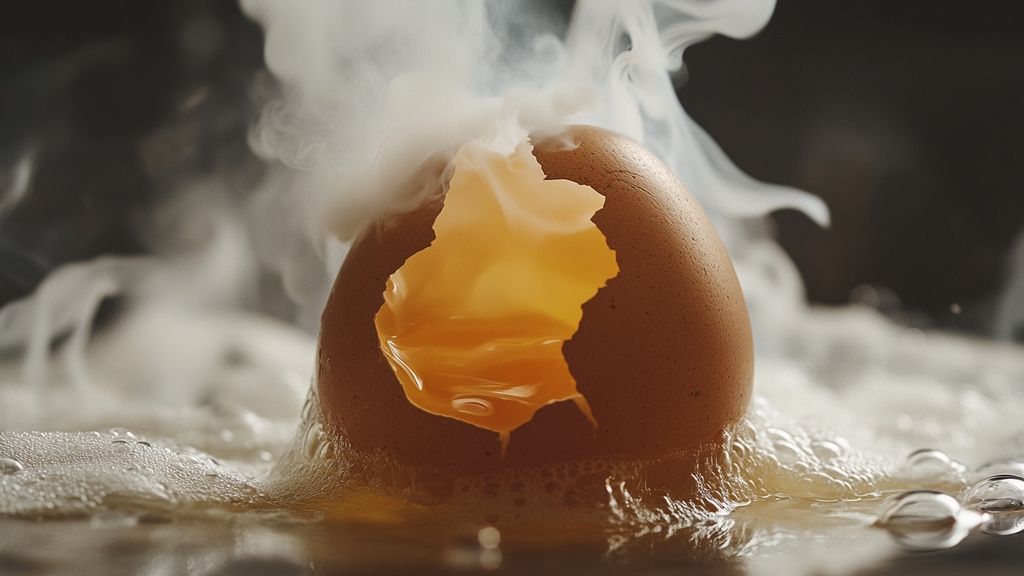
Make an eggshell disappear
This experiment illustrates the principle of diffusion. Take an eggshell and immerse it in vinegar for 24 hours. The vinegar reacts with the calcium carbonate in the shell, resulting in its dissolution. At the end of this experiment, you will have a translucent membrane, which allows for the explanation of the notion of chemical reaction and the importance of acids and bases.
Make an iceberg
Think of a melting ice simulation to explore the concepts of state of matter. Fill a container with water and place a small bowl or cup inside. Add colored water with food dye into the bowl. Place everything in the freezer. As the ice starts to melt, observe the state changes and discuss the implications of melting glaciers in the context of climate change.
Make the pepper flee
This fun experiment demonstrates the surface tension of water. Fill a shallow plate with water and sprinkle a bit of pepper on it. Dip your finger in dish soap and then touch the surface of the water. The pepper will instantly move away. This explains how soap acts on surface tension, altering the properties of water.
The traveling water
Generate a flow of water using capillarity by placing one end of an absorbent paper in the water of one container and the other end in a second empty container. This demonstration shows how plants use the phenomenon of capillarity to transport water from their roots to their leaves. Children can see the water travel in a fun and visual way.
Create a lava lamp
A homemade lava lamp is a wonderful way to learn about density and the behavior of liquids. Fill a bottle with water about a third of the way, add a bit of oil, then a few drops of food dye. When you add baking soda, the bubbles of air created will make the dye rise and fall, mimicking the movement in a real lava lamp. This experiment helps understand the differences in density between liquids.
The unpoppable balloon experiments
This experiment is perfect for illustrating the principle of pressure. Take a balloon and poke it with a needle. You will find that the balloon does not burst as long as the pressure is evenly distributed, for example, by placing the balloon on a soft surface. This opens the discussion on atmospheric pressure and different types of forces.
Experimenting with water
Water is an excellent agent for exploring various physical concepts. For example, testing buoyancy with various objects to teach bouyancy and fluid dynamics. Children can conduct experiments to guess whether an object will sink or float in water and then verify their hypotheses to learn more about densitometry.
Understanding supercooling
This captivating experiment helps understand the principles of thermodynamics. Fill a bottle with distilled water and place it in the freezer without letting it freeze. When removed, a disturbance can cause the immediate solidification of the water, illustrating a state of supercooling. A discussion about the practical applications of this property, such as the operation of modern refrigerators, can follow.
For greater autonomy, children can document their observations and results in a logbook. This develops their critical thinking and understanding of scientific methods. Discovering physics through simple experiments at home opens new perspectives and nurtures their scientific curiosity for the future.
| Experiment | Learning Axis |
| Create a rainbow in a bottle | Refraction of light |
| Make an egg float in water | Density of liquids |
| Make a lava lamp | Immiscibility of liquids |
| Make giant bubbles | Surface tension |
| Observe supercooling | Thermal phenomena |
| Create an iceberg in a glass | Properties of ice |
| Make the pepper flee with soap | Capillary action |
| Experiment with compressed air | Atmospheric pressure |
| Make unpoppable balloons | Elasticity and forces |
| Make colored water travel | Capillarity |
Physics is a fascinating science but often perceived as complex. However, it is possible to learn its principles in a playful and accessible way through simple experiments conducted at home. This article offers a range of scientific activities that will stimulate children’s curiosity while facilitating their understanding of physical concepts.
Create a rainbow in a bottle
With a few drops of food coloring, water, and oil, you can create a mini rainbow. By carefully adding the liquids, children can observe how different densities create a separation of colors, an excellent way to explain the concept of density and mixing.
Make water travel
This fun experiment will involve making water “travel” from one container to another using a piece of string or twine. This project allows for the explanation of the principles of capillarity and surface tension. Children will learn how liquids can move against gravity.
Make an iceberg
By mixing water, salt, and a bit of food coloring, you can create a floating “iceberg.” This experiment allows for discussing the salinity of water and the principles of bouyancy. Children will see how salt affects the density of water and, consequently, the ability of the object to float.
Make the pepper flee
A bit of pepper, water, and soap will allow you to conduct a captivating experiment. By adding soap to a container of water with pepper, children will observe how the pepper moves away from the soap. This is due to the surface tension of the water, sparking a discussion on the forces at play.
Understanding density with the floating egg
This experiment requires an egg, water, and salt. By adding salt to the water, children will see a floating egg. This illustrates the concept of density and the role that salinity plays in the bouyancy of objects.
Create a homemade lava lamp
With simply oil, water, food coloring, and effervescent tablets, you can create a lava lamp. This playful project clearly shows how liquids of different denses interact and layer on top of one another.
The unpoppable balloons
Use a simple technique to prove that, despite appearances, a balloon can be supported by a flame. By poking a lit balloon with a sharp object, children will learn how pressure and temperature play a role in the strength of materials.
The science of magical milk
A bit of milk, food coloring, and dish soap are the necessary ingredients to conduct an experiment that shows fascinating chemical reactions. Children will observe how soap breaks the surface tension of milk and creates colorful patterns.
Explore the world of fractals
Fractals are repetitive geometric figures found in nature as well. Using simple drawings or free software, you can introduce children to repetitive patterns and explore the mathematical theories behind these incredible shapes.
The chaos theory
With simple and visual examples, children can discover the chaos theory through experiments like the Foucault pendulum or simulation games that show how small initial changes can create large effects. For more details, check out this article on the chaos theory.
Put the theorems into practice
By exploring mathematical theorems, children can see how these abstract concepts can be applied in concrete physical experiments. This will broaden their understanding of physics and mathematics.
- Rainbow in a bottle
- Floating egg
- Water travel
- Homemade lava lamp
- Melting salt
- Pepper and soap
- Create an iceberg
- Unpoppable balloons
- Supercooling
- Disappearing eggshell
Learning physics at home
Conducting scientific experiments at home is a fun and enriching way to learn physics. With simple materials, you can easily explore fundamental concepts while having fun. This article presents various experiments to try that will awaken your curiosity and that of younger ones.
Experiments with water
Make water travel
This experiment illustrates the principle of capillarity. For this, you will need several glasses, water, and pieces of paper towel. Fill one glass with colored water using food coloring. Place empty glasses so they are connected by pieces of paper towel. You will find that the water will move through the paper, thus demonstrating how plants absorb water.
The floating egg
This experiment allows you to explore the decision and the concept of density. Fill a glass with water and immerse an egg in it. The egg will sink. Then, gradually add salt to the water and mix until dissolved. You will see that the egg floats as the density of the water increases due to the salt, demonstrating the principle of buoyancy.
Experiments with liquids
The lava lamp
To create a lava lamp, use a clear bottle, water, cooking oil, and food coloring. Fill the bottle two-thirds full of water, then add a few drops of coloring and finally the oil. You will see that the oil floats to the surface, creating a lava-like effect. This experiment demonstrates how different liquids separate due to their density.
The magical milk
This fascinating experiment uses milk, food coloring, and dish soap. Pour some milk into a plate, then add a few drops of coloring to the surface. Next, touch the mixture with a drop of dish soap. You will observe a beautiful visual reaction, illustrating how surface tension works.
Experiments with solids
Make an eggshell disappear
This experiment highlights solubility, by taking an eggshell and immersing it in vinegar. Over time, the vinegar reacts with the calcium in the shell, slowly dissolving it. Observe the process, and you will understand how acids can cause chemical reactions.
Make an iceberg
Get a plastic container filled with water and some salt. Also add some ice cubes to create an “iceberg”. This phenomenon illustrates how salt creates a temperature difference and state of matter, showing the behavior of water in different conditions.
Fun experiments with pepper
Make the pepper flee
For this experiment, pour water into a dish and add a few grains of pepper to the surface. Next, apply a drop of dish soap to your finger and touch the water. You will see that the pepper moves away from your finger. This demonstrates the properties of surface tension and the reaction of liquids.
Each of these experiments is accessible and allows for a playful and interactive explanation of essential concepts in physics and chemistry. By conducting these activities, you will not only promote learning but also the scientific curiosity of those around you.
FAQ about simple experiments to learn physics at home
What are the simple experiments that can be done at home? There are many fun experiments, such as making an egg float to understand density, creating a rainbow in a bottle, or observing the separation of oil and water.
What materials are needed for these experiments? Most experiments require common materials such as water, oil, eggs, salt, and glass or plastic containers.
Are the experiments suitable for children? Yes, most experiments are designed to be educational and fun for children, fostering their curiosity and learning of physics.
How can I explain scientific concepts to children? Use simple analogies and encourage them to ask questions. Have them observe the results of the experiment and discuss together the scientific principles governing them.
Where can I find detailed instructions for these experiments? Many resources, such as science books, websites dedicated to science communication, and even online videos can provide detailed instructions.
How long does it take to conduct an experiment? The duration varies depending on the experiment, but generally, they can be completed in a few minutes to an hour.
Do the experiments require adult supervision? Yes, it is recommended to have an adult supervising the experiments, especially if materials like eggs or non-food chemicals are used.
Are the experiments safe to conduct at home? Most experiments are safe, but it is important to follow the instructions and observe the recommended safety precautions.