|
IN BRIEF
|
Solar and lunar eclipses represent fascinating astronomical events that capture the attention of sky watchers around the world. A solar eclipse occurs when the Moon positions itself between the Earth and the Sun, leading to a partial or total obscuration of this radiant star. In contrast, a lunar eclipse takes place when our natural satellite passes through the Earth’s shadow, causing temporary darkness. Understanding the mechanisms behind these enchanting phenomena is essential to fully admire them and appreciate their beauty. Astronomy enthusiasts, whether novices or experienced, come together to observe these celestial spectacles, making these moments even more precious and memorable.
These eclipses are fascinating celestial phenomena that captivate the attention of astronomers and astronomy enthusiasts. Two main types of eclipses occur: solar and lunar eclipses. In this article, we will examine the mechanisms behind these extraordinary events, the different categories of eclipses, and provide tips on the best observation practices. Get ready to explore the secrets of these cosmic spectacles!
Understanding the Phenomenon of Eclipses
An eclipse occurs when three celestial bodies align in space, creating an obscuration. In the case of a lunar eclipse, this happens when the Earth is positioned between the Sun and the Moon, preventing sunlight from reaching our satellite. Conversely, a solar eclipse happens when the Moon positions itself between the Earth and the Sun, partially or totally obscuring the light emitted by the solar body.
The Solar Eclipses
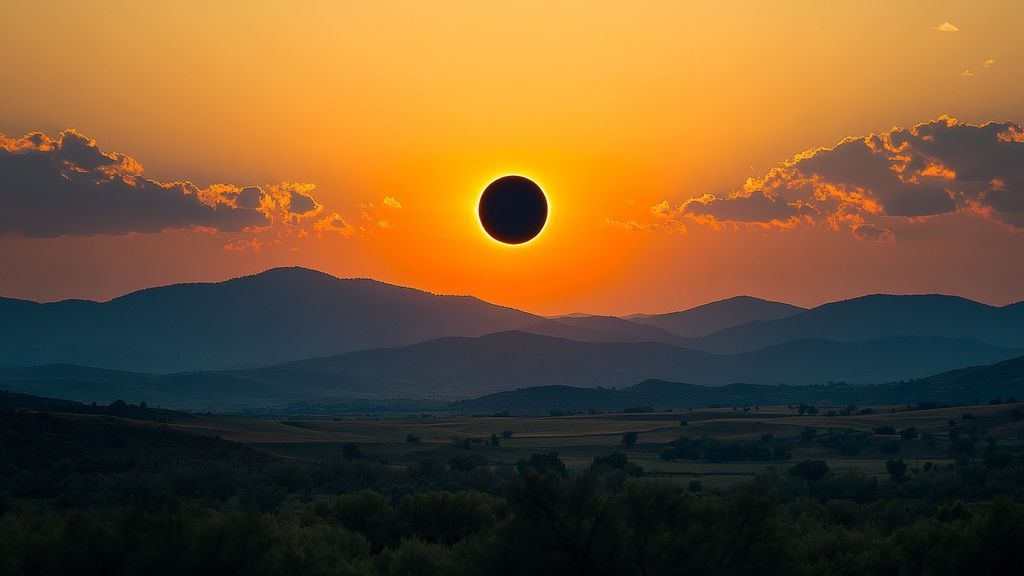
During a solar eclipse, several types exist depending on the degree of obscuration. When the Moon completely covers the Sun, it is referred to as a total solar eclipse. On the other hand, if only part of the Sun is obscured, it is designated as a partial solar eclipse. Finally, when the Moon is too far from the Earth to completely cover the Sun, an annular solar eclipse occurs, revealing a ring of light around the Moon.
The Lunar Eclipses
Lunar eclipses can also be classified into different categories. A total lunar eclipse occurs when the Moon completely enters the Earth’s shadow, resulting in a reddish hue due to the scattering of sunlight through the Earth’s atmosphere. A partial lunar eclipse occurs when only part of the Moon enters the Earth’s shadow, while a penumbral lunar eclipse happens when the Moon passes only through the more diffuse shadow of the Earth, making the event less striking.
Observation of Eclipses
For the curious and astronomy enthusiasts, observing an eclipse can be an unforgettable experience. For solar eclipses, it is crucial to use special glasses to prevent eye damage. These devices filter the intense sunlight. An alternative method is to use a pinhole projector, which allows you to observe the eclipse indirectly.
Regarding lunar eclipses, they are more accessible as no special protection is needed. All you need is a good clear sky and to observe the Moon with binoculars or a telescope for an even more immersive experience. Remember to bring a camera to capture the beauty of these celestial events.
Solar and lunar eclipses are natural spectacles that deserve to be observed. Each phenomenon has its unique characteristics and beauty. Whether you are a passionate amateur or just curious, these celestial events are an invitation to look up at the sky and appreciate the grandeur of the universe.
Comparison of Solar and Lunar Eclipses
| Type of Eclipse | Observations and Explanations |
| Solar Eclipse | Occurs when the Moon positions itself between the Earth and the Sun, blocking sunlight. |
| Lunar Eclipse | Happens when the Earth is positioned between the Sun and the Moon, projecting its shadow onto our satellite. |
| Types | Total solar eclipse, partial, and annular. Total lunar eclipse, partial, and penumbral. |
| Visibility | Visible from certain areas of the Earth depending on the alignment of celestial bodies. |
| Frequency | Solar eclipses occur about 2 to 5 times a year, while lunar eclipses are more frequent. |
| Moment | A solar eclipse occurs during a new moon, and a lunar eclipse during a full moon. |
| Impact on Light | Solar eclipses create temporary darkness in full daylight. Lunar eclipses darken the Moon. |
| Equipment Needed | For solar eclipses, special glasses are essential. For lunar eclipses, binoculars or a telescope can enhance the view. |
| Cultural Significance | Often surrounded by myths and legends, both in antiquity and in modern cultures. |
Solar and lunar eclipses are fascinating astronomical events that capture the attention of astronomy enthusiasts and skywatchers. These phenomena occur when celestial bodies align in a particular way, creating breathtaking light displays. In this article, we will explore what lies behind these eclipses, how they work, and how to observe them safely.
What is a Solar Eclipse?
A solar eclipse occurs when another celestial body, in this case, the Moon, is positioned directly between the Earth and the Sun. This results in a partial or total obscuration of sunlight, casting a shadow on the Earth’s surface. There are three main types of solar eclipses: total, partial, and annular, each with unique features. Only locations in the Moon’s shadow can experience a total eclipse, while those in the penumbra will experience a partial eclipse.
What is a Lunar Eclipse?
In contrast to the solar eclipse, a lunar eclipse occurs when the Earth is positioned between the Sun and the Moon. In this configuration, the Earth’s shadow blocks the sunlight that illuminates our natural satellite. This phenomenon can also occur in various forms, including the total eclipse, where the Moon is entirely engulfed in the Earth’s shadow, and partial eclipses, where only part of the Moon is darkened.
The Differences Between Solar and Lunar Eclipses
Although solar and lunar eclipses share similarities in that they involve the interaction of at least three celestial bodies, they differ in their configuration and visual impacts. The solar eclipse is observed in broad daylight and can be very impressive, while the lunar eclipse generally occurs at night and may present reddish hues, often referred to as “blood moon.”
How to Observe Eclipses?
To fully enjoy these celestial events, good preparation is essential. It is highly recommended to use certified special glasses for observing solar eclipses to avoid damaging your eyes. For lunar eclipses, no protection is necessary, and a simple telescope or binoculars can enrich your experience. Also, consider planning ahead to find a location with a clear view of the sky, away from urban lights.
The Importance of Scientific Observation
Solar and lunar eclipses provide genuine opportunities to study and better understand the workings of the solar system. They also allow for the observation of phenomena such as the Moon’s atmosphere or the appearance of the solar corona. These events attract not only astronomy enthusiasts but also professional astronomers who use these moments to conduct valuable research and observations.
- Solar Eclipse: Occurs when the Moon positions itself between the Earth and the Sun.
- Lunar Eclipse: Happens when the Earth is between the Sun and the Moon.
- Types of Solar Eclipses: Total, Partial, and Annular.
- Solar Observation: Requires glasses or special filters to protect the eyes.
- Total Eclipse: The entire surface of the Sun is obscured by the Moon.
- Partial Eclipse: Only part of the Sun is hidden.
- Annular Eclipse: The Moon covers the Sun in the center, leaving a visible ring.
- Lunar Observation: Can be seen with the naked eye, without special protections.
- Penumbral Lunar Eclipse: The Moon passes through the Earth’s diffuse shadow.
- Rarity of Eclipses: Total eclipses are less frequent than partial eclipses.
- Astronomical Events: Eclipses bring attention to other celestial objects.
- Team Observation: Sharing the experience with other enthusiasts is very enriching.
- Precautions: Always check the observation conditions before an event.
Introduction to Eclipses
Eclipses are fascinating astronomical events that captivate human imagination for centuries. Whether it’s a solar eclipse or a lunar eclipse, these phenomena offer a dazzling spectacle when one celestial body hides behind another. In this article, we will explore in detail the nature of these eclipses, ways to observe them, and the scientific explanations that underlie them.
Solar Eclipse: Phenomenon and Types
A solar eclipse occurs when the Moon positions itself between the Earth and the Sun, totally or partially obscuring sunlight. There are three types of solar eclipses:
Total Solar Eclipse
During a total solar eclipse, the Moon completely covers the Sun. This phenomenon can be observed from certain regions on Earth for a few minutes, creating a nighttime atmosphere during the day and allowing one to observe the solar corona.
Partial Solar Eclipse
In a partial solar eclipse, only part of the Sun is obscured by the Moon. Although it is less impressive than a total eclipse, it remains a captivating spectacle.
Annular Solar Eclipse
An annular solar eclipse occurs when the Moon is too far from the Earth to completely cover the Sun. This creates a luminous ring around the lunar silhouette, giving a spectacular appearance to the event.
Lunar Eclipse: Phenomenon and Types
In contrast to a solar eclipse, a lunar eclipse occurs when the Earth is positioned between the Sun and the Moon, projecting its shadow onto our satellite. There are also several types of lunar eclipses:
Total Lunar Eclipse
A total lunar eclipse occurs when the Moon completely enters the Earth’s shadow. It then appears with an intense reddish hue, which often earns it the name Blood Moon.
Partial Lunar Eclipse
During a partial lunar eclipse, only a part of the Moon enters the Earth’s shadow. This allows for part of the Moon to be completely darkened while the other remains illuminated.
Penumbral Lunar Eclipse
Finally, a penumbral lunar eclipse occurs when the Moon passes through the penumbral shadow of the Earth, resulting in a slight dimming of lunar light, almost imperceptible to the naked eye.
How to Observe Eclipses?
To fully enjoy eclipses, it is essential to follow a few observation recommendations:
Observation of Solar Eclipses
During a solar eclipse, it is crucial to never look directly at the Sun without adequate protection. Using special glasses or solar filters is mandatory to prevent eye damage. Moreover, observation equipment like telescopes equipped with filters can enhance your experience.
Observation of Lunar Eclipses
Lunar eclipses are less risky and can be observed with the naked eye. A telescope or binoculars can improve the view, allowing for a detailed observation of the lunar surface during the event. Choosing a location with minimal light pollution will complete the picture for an unforgettable experience.
Scientific and Cultural Importance
Eclipses have played a crucial role in our understanding of astronomy and the movements of celestial bodies. They are often used to test theories, such as Einstein’s relativity. Additionally, they hold a special place in many cultures, symbolizing mystical and spiritual events.
FAQ about Solar and Lunar Eclipses
Q: What is a solar eclipse? A solar eclipse occurs when the Moon is positioned directly between the Sun and the Earth, thus totally or partially obscuring sunlight.
Q: What is a lunar eclipse? A lunar eclipse occurs when the Earth is positioned between the Sun and the Moon, preventing sunlight from reaching our natural satellite.
Q: What are the types of solar eclipses? There are three types of solar eclipses: the total eclipse, where the Moon completely covers the Sun, the partial eclipse, where only part of the Sun is obscured, and the annular eclipse, where the Moon is too far to entirely cover the Sun.
Q: When does a lunar eclipse occur? A lunar eclipse usually occurs during a new moon, when the Moon enters the Earth‘s shadow.
Q: How to safely observe a solar eclipse? It is crucial to use special glasses for observing solar eclipses to protect your eyes from the sun’s rays.
Q: How often do solar and lunar eclipses occur? Eclipses occur several times a year, but a total eclipse may be rarer in some parts of the globe.
Q: Why are eclipses important for scientists? Eclipses provide an opportunity to study the Sun and the Moon, particularly by analyzing the solar corona during a total eclipse.
Q: How to prepare for observing a lunar eclipse? Choose a location with minimal light pollution and make sure to check the times and duration of the eclipse.