|
IN BRIEF
|
Space weather, an emerging discipline, is concerned with the impact of solar activity on our planet. Charged particles emitted by the Sun can cause disturbances in the Earth’s geomagnetic field, thus affecting various systems on Earth. These phenomena have non-negligible repercussions, notably on the functioning of satellites, which experience modifications to their orbits due to the increased friction caused by atmospheric heating. Furthermore, this situation can lead to damage to energy networks and affect the daily life of humans. Understanding space weather becomes essential to anticipate its consequences and better preserve our technological infrastructures.
Space weather, although less known than its terrestrial equivalents, plays a crucial role in our daily lives. It mainly concerns the effects of charged particles emitted by the Sun, which can lead to notable disturbances in the terrestrial environment and influence the functioning of satellites. This article explores the consequences of these solar events on our planet and on the technologies that orbit around it.
Space Weather and Its Influence on Earth
Space weather refers to variations in solar activity that have effects on the terrestrial environment. When a coronal mass ejection or solar storm occurs, charged particles reach our planet, disrupting the geomagnetic field. These disturbances can trigger auroras, but they also have more serious consequences, such as electronic damage to our infrastructure.
The impacts of these space conditions include disturbances in energy distribution networks. Indeed, fluctuations in the magnetic field can cause voltage variations, leading to power outages or damaging sensitive equipment. Industries rely on these systems, and a disturbance can have far-reaching repercussions.
Satellites Facing the Challenges of Space Weather
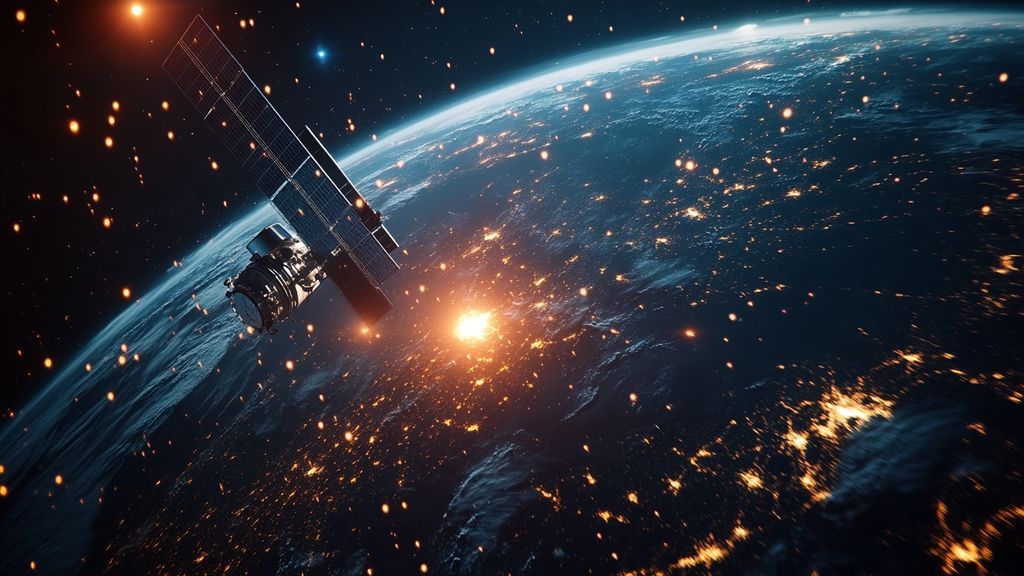
Satellites play an essential role in observing the Earth, but they are not immune to the effects of space weather. Due to atmospheric variations caused by solar activity, these devices may experience a decrease in their lifespan. For example, the increase in density in the terrestrial atmosphere leads to an increase in friction on satellites, causing modifications to their orbits.
Each time a solar storm occurs, satellite operators must adjust their craft’s trajectories. These orbital corrections, while vital, require energy and reduce operational efficiency. As a result, the economic impact on space companies can be considerable.
Atmospheric Pollution by Extraterrestrial Particles
Another interesting aspect of space weather is the pollution of the Earth’s atmosphere caused by micrometeoroids. These particles, although small, can interact with the terrestrial atmosphere and have harmful effects on satellite instruments. Studies show that this pollution, of extraterrestrial origin, contributes to altering atmospheric conditions, exacerbating problems we already face due to human activity.
Research and the Future of Space Weather
To better understand and anticipate the effects of space weather, missions like the EarthCare satellite, developed by ESA and JAXA, focus on studying the links between climate change and cloud formation. This research is essential for modeling the future impacts of climate change in relation to solar activity, thus allowing for better preparation against extreme events.
Scientists are also developing more accurate models to predict solar events to mitigate their effects on satellites and terrestrial infrastructures. This requires international cooperation, as the impacts of space weather exceed national borders and affect the entire planet.
| Impact | Succinct Description |
| Geomagnetic Field Disturbances | Solar particles can cause imbalances in the Earth’s magnetic field, leading to geomagnetic storms. |
| Effects on Satellites | Satellites experience increased friction, which may require frequent orbital corrections. |
| Risk of Electronic Damage | Solar radiation can alter satellite integrated circuits, thereby reducing their lifespan. |
| Impacts on Electrical Networks | Fluctuations in solar activity can cause outages or fluctuations in energy distribution systems. |
| Auroras | Intensified solar storms lead to auroral displays visible in unusual regions. |
| Communication Disruptions | Radio waves and GPS signals can be degraded by ionospheric activity caused by solar winds. |
| Atmospheric Pollution | Micrometeoroids and space debris contribute to pollution in the upper atmosphere, impacting various atmospheric processes. |
| Earth Climate Research | Satellites like EarthCare studied to understand the interactions between climate change and atmospheric conditions. |
| Satellite Lifespan | The effects of space weather can reduce the overall functional longevity of orbiting satellites. |
Space weather is a growing field that studies the effects of solar phenomena on our planet and on the equipment that orbits around it. Its consequences can be significant, ranging from disturbances in energy distribution networks on Earth to the direct impact on the lifespan of satellites. This article examines in detail these impacts, as well as mitigation measures.
Effects of Space Weather on Earth
Charged particles from the Sun, when they reach Earth, can disrupt the geomagnetic field of the planet. This disturbance can lead to a series of undesirable effects, including spectacular auroras, but also communication and navigation issues, due to effects on the ionosphere.
Moreover, the effects of space weather can be felt on the ground, impacting energy infrastructure. Solar storms lead to fluctuations in the magnetic field that can damage transformers and disrupt electrical networks, generating power outages and affecting users over a wide area.
Impact on Satellites
Satellites, which play a crucial role in monitoring weather conditions, are also vulnerable to space weather. Increased atmospheric density related to solar activity increases friction on orbiting satellites, modifying their trajectories and necessitating frequent orbital corrections. This can reduce their lifespan and incur additional costs in terms of maintenance and management.
Geostationary satellites, in particular, can suffer devastating effects due to their high altitude. Solar storms can systematically decrease their operational lifespan, resulting in significant economic loss for companies reliant on these technologies.
Policies and Prevention
In response to the challenges posed by space weather, it is essential to implement robust policies to monitor and manage these phenomena. Satellites like EarthCare, developed by agencies such as ESA and JAXA, aim to better understand the links between climatic effects and clouds, bringing a new dimension to research in space meteorology.
In conclusion, understanding space weather and its effects on Earth and satellites is crucial to ensuring the continuity of modern services and the safety of infrastructures. In-depth studies and innovations in the field of observation are essential to better grasp these fascinating issues.
- Impact on the geomagnetic field: Disturbances caused by solar charged particles.
- Effects on satellites: Reduction of their lifespan due to extreme space conditions.
- Increased friction: Heightened atmospheric friction influencing satellites’ orbits.
- Disturbances in energy networks: Damage to terrestrial infrastructures related to solar storms.
- Atmospheric acidity: Pollution due to micrometeoroids affecting the upper atmosphere.
- Monitoring by satellites: Essential tools for monitoring space weather and its impacts.
- Climate change: Interactions between solar activity and clouds studied by space missions.
- Weather forecasting: Growing importance of space weather for long-term forecasts.
Introduction to Space Weather
Space weather is a recent field of study that examines the effects of solar activity on our planet. It encompasses phenomena such as solar storms and the emission of charged particles that, when they reach Earth, can have significant consequences. This phenomenon can influence not only our immediate environment but also the functionality of the satellites in orbit. This article explores the impacts of space weather on Earth and satellites, highlighting the importance of this discipline for a better understanding of our universe.
The Effects of Solar Activity on Earth
Charged Particles and the Geomagnetic Field
When the Sun emits charged particles, they can have a considerable impact on the Earth’s geomagnetic field. This disturbance can lead to errors in navigation systems and communications. Moreover, these plasma cells interact with the ionosphere, causing fluctuations that can generate noise in radio signals. This underscores the necessity for continuous monitoring of solar activity to anticipate and mitigate these effects on our planet.
Consequences for Ground Infrastructures
Another concerning aspect of solar storms is their potential to damage critical infrastructures on Earth. Energy distribution networks can be disrupted, leading to massive power outages and even prolonged blackouts. Studies have shown that intense space weather events can cause overloads in electrical lines, leading to physical damage. It is imperative for authorities to be aware of these risks and establish adequate protective measures.
The Impact of Space Weather on Satellites
Satellite Lifespan and Performance
The satellites operating in Earth’s orbit are particularly vulnerable to the effects of space weather. When atmospheric density increases due to solar eruptions, it leads to an increase in friction on satellites, modifying their orbits. To compensate for this loss of speed, constant adjustments are necessary, which can reduce their operational lifespan. Therefore, satellite mission planning must include precise space weather forecasts to ensure optimal and prolonged resource utilization.
Risks to Onboard Equipment
Onboard equipment in satellites can also be damaged due to radiation generated during solar storms. This radiation can alter electronic circuits, causing temporary or permanent failures. Moreover, phenomena such as auroras, while fascinating, result from these solar interactions and can impact the proper functioning of satellites. Researchers are continuously working to develop protection technologies against these effects, but this requires investment and sustained attention.
Monitoring and Space Weather Forecasting
Importance of Continuous Monitoring
Monitoring space weather is crucial for anticipating uncertain events. Organizations such as NOAA and ESA are implementing forecasting systems to track solar activity and its impacts on our planet. These organizations collect real-time data and communicate essential information to satellite users and critical infrastructures to minimize potential damage. A proactive commitment in this area is essential to mitigate future risks.
Education and Awareness
To address the growing impact of space weather, it is essential to educate the public and concerned professionals about its effects. Educational programs should be established to raise awareness among youth and professionals about the challenges of space meteorology. A better understanding of these phenomena can help develop effective response strategies and enhance the resilience of our infrastructures.
FAQ on Space Weather: Impacts on Earth and Satellites
What is space weather? Space weather, also known as space meteorology, focuses on studying the influence of solar activity on our planet and its space environment.
How does space weather affect satellites? Solar activity, by increasing the density of Earth’s atmosphere, causes additional friction on satellites, which can lead to a slowdown in their orbit and, consequently, reduce their lifespan.
What effects can space weather have on Earth? Charged particles from the Sun can disrupt the geomagnetic field, causing damage to infrastructures and disrupting energy distribution networks.
Why is it important to study space meteorology? Given the growing interconnection between Earth and space, understanding space weather is essential to protect the technologies that rely on satellites and to anticipate the environmental impacts on our planet.
How do satellites monitor space weather? Earth observation satellites use various instruments, such as imagers and radars, to collect data on climate parameters and detect phenomena related to space weather.
What damage can space weather cause to electrical devices? Solar storms can cause current spikes in electrical networks, leading to power outages and damage to sensitive equipment.
What is the EarthCare satellite and what is its role? The EarthCare satellite, developed collaboratively between ESA and JAXA, aims to study the relationship between climate change and clouds while analyzing interactions between space weather and the terrestrial environment.