|
IN SHORT
|
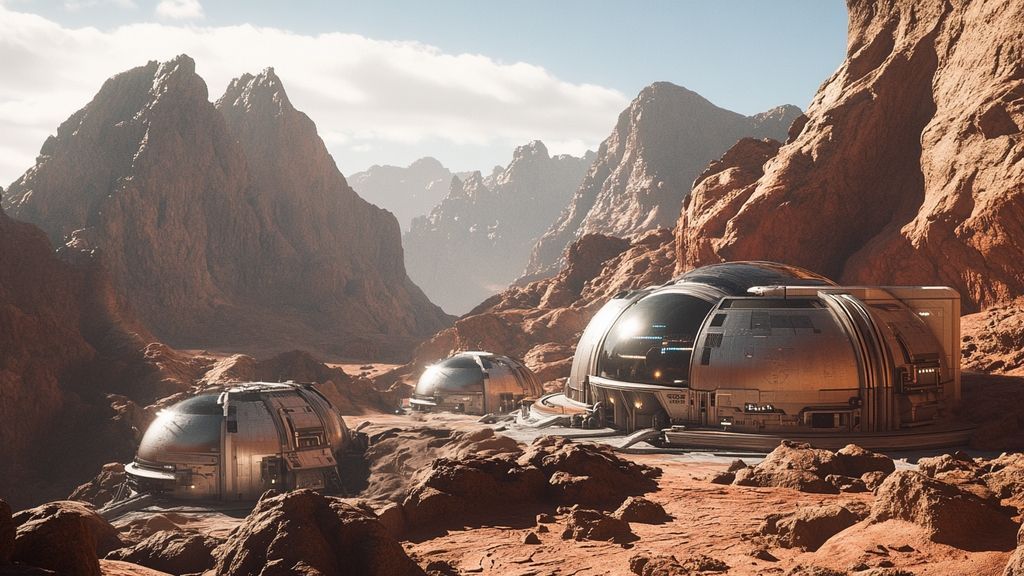
The colonization of Mars represents a fascinating and complex challenge that piques the interest of scientists and astronomy enthusiasts worldwide. The idea of establishing an autonomous human community on the red planet has long been a central theme in discussions about space exploration. Although major obstacles such as the lack of a proper atmosphere and cosmic radiation must be overcome, research on the use of Martian resources, such as the frozen water found at the poles, opens the door to new possibilities. By envisioning well-designed Martian bases, we move closer to realizing a space utopia that could one day become a reality.
The colonization of Mars represents a fascinating and complex challenge. The idea of establishing human colonies on the red planet raises a wide array of questions, ranging from technical aspects to legal considerations. This article will explore the foundations of this ambitious initiative, addressing technical obstacles, resources available on Mars, and the issues related to the Martian environment.
Technical obstacles to overcome
Before dreaming of an autonomous colony on Mars, it is important to understand the different technical obstacles that must be overcome. First of all, Martian gravity, which is approximately 38% of that of Earth, poses unique challenges at the level of human biomechanics. Additionally, the low atmospheric pressure and the presence of solar radiation heighten the risks to human health. Due to Mars’s thin atmosphere, adequate protection will be necessary to ensure the safety of the colonists.
Martian resources
One of the major challenges of colonizing Mars is the supply of resources. Although water is present in the form of ice at the poles, it will be necessary to develop technologies to extract and purify this vital resource. The concept of Martian bases includes transforming the architecture of the habitat to allow for a controlled and livable atmosphere for potential humans. The use of hydrogen imported from Earth to produce oxygen through chemical reactions is also a feasible solution.
Martian environment and protection
Mars presents a hostile environment that requires special attention. The absence of a strong magnetic field exposes the surface to harmful radiation, posing a high risk to the health of the colonizers. In response, underground habitats or structures with appropriate protections will be necessary to mitigate these harmful effects. Understanding the impact of natural elements, such as dust storms, is also essential for the safety of the bases.
Legal and ethical considerations
The colonization of Mars raises complex legal and ethical questions. Who holds the rights to Martian land? Will the first colonizers have property rights on the natural resources that the planet might offer? The international community will need to establish agreements to regulate these aspects and ensure responsible and ethical exploration of Mars. Moreover, the issue of the commercial exploitation of resources must be carefully examined to avoid any form of astrocapitalism that could be detrimental.
Pushing exploration to new horizons
The colonization of Mars pushes the boundaries of our understanding of the universe and of ourselves. By exploring new environments, we refine our perspective on interplanetary life. The establishment of colonies on Mars could also lead to technological advancements that would benefit Earth. Major colonization projects will stimulate innovations in space research and ecology. To learn more about the links between volcanic activity and its environmental impacts, check out this article on the impact of volcanoes on the terrestrial environment.
| Aspect | Details |
| Atmosphere | Thin and minimally protective, with a weak magnetic field. |
| Temperatures | Extreme, requiring adapted habitats for survival. |
| Water resources | Present in the form of ice, primarily at the Martian poles. |
| Radiation | High risks due to the absence of a thick atmosphere. |
| Legal ownership | Limited rights to commercial resources, not to land. |
| Transport technology | Need for innovations for effective interplanetary travel. |
| Food autonomy | Crops in controlled environments necessary for survival. |
| Financial cost | Massive investments required for research and implementation. |
The colonization of Mars is a captivating subject that is the focus of much discussion and research within the scientific community. The idea of establishing an autonomous human colony on the red planet raises fascinating questions, ranging from the Martian environment to the technology needed to make this ambition a reality. This article explores the foundations of this ambitious project and highlights the challenges to be overcome to turn it into a reality.
The environmental challenges of Mars
Mars presents numerous environmental challenges that complicate colonization efforts. With such a thin atmosphere and a weak magnetic field, the risk of exposure to radiation is heightened, making life on this planet problematic. Additionally, the extreme temperatures represent a major obstacle, necessitating specific habitats to protect future colonists.
The water resources on Mars
An essential resource for any colony is water. Although quantities of frozen water have been identified on Mars, particularly at the poles, technologies will need to be developed to extract and transform this ice into drinking water. Access to this resource is crucial for ensuring the survival of the colonists.
The necessary structures for colonization
To envision life on Mars, adapted structures are essential. It is crucial to design habitats that guarantee a healthy living environment while taking extreme conditions into account. These habitats must be capable of regulating temperature, preserving air, and protecting against radiation. Experimental studies on the design of these structures are currently underway.
Technology and means of transport
Transporting materials and people to the red planet will require significant advancements in space technology. Projects for spacecraft like Elon Musk’s Starship aim to accomplish this mission. However, it remains to be seen whether these technologies will be sufficiently advanced to enable large-scale colonization.
The legal implications of colonization
The question of property rights on Mars raises legal debates. Future colonizers might have the possibility to claim rights over Martian resources, but the land itself might remain a collective space. These legal perspectives require discussions at the international level to avoid potential conflicts.
The future of Martian explorations
As robotic missions continue to explore the planet, colonization ambitions are becoming increasingly concrete. Discoveries made using Martian probes and rovers will provide vital information about the composition of the Martian environment and assist in defining the next steps toward the establishment of colonies. The exploration of Mars is just the beginning of a new era for humanity and potential interplanetary travel.
- Martian environment: Thin atmosphere, extreme temperature and high radiation levels.
- Water resources: Ice present at the poles, essential for survival.
- Protected habitats: Necessity to design habitats providing protection against the hostile environment.
- Transport technologies: Development of advanced spacecraft for the journey to Mars.
- Food autonomy: Solutions to produce food on-site from Martian water and soil.
- Property rights: Legal issues regarding the exploitation of Martian resources.
- Robotic exploration: Use of rovers for mapping and studying the soil before human arrival.
- Financial costs: Estimation of expenses to establish sustainable colonies.
- International participation: Collaboration between nations and private companies in this ambitious project.
- Psychological issues: Management of psychological impacts on colonists during prolonged stays.
The colonization of Mars represents a fascinating theme that attracts the attention of both scientists and the general public. This ambitious project, which aims to establish an autonomous human community on the red planet, requires a deep understanding of the challenges to be overcome, the resources available, and the necessary technologies. In this article, we will explore the foundations of Martian colonization, including technical obstacles, environmental considerations, and legal implications.
The environmental challenges
The composition of the Martian atmosphere is one of the main challenges to overcome. Indeed, Mars has a very thin atmosphere, mainly composed of carbon dioxide at about 95%. This means that a Martian colony will need to create spacious and secure habitats where the air could be oxygenated and where pressure could be regulated.
Extreme temperatures
Temperatures on Mars vary enormously, reaching values beyond -60 degrees Celsius at night. To cope with these harsh climatic conditions, habitats must be designed to insulate and warm the living space of the colonists sufficiently.
Radiation
Another major challenge is exposure to radiation. With a thin atmosphere and weak magnetic field, colonies on Mars would be vulnerable to cosmic rays and solar particles. It will therefore be crucial to use construction materials or to explore ways to bury habitats below the Martian surface to minimize health risks for the inhabitants.
Resources and supply
For colonization to be sustainable, it is vital to identify and exploit local resources. Mars has reserves of water, primarily in the form of ice, particularly at the poles. A reliable technology to extract this ice and convert it into liquid water is essential for human survival.
Energy production
Martian colonies will also need an adequate energy supply. The potential to use solar panels is promising due to Mars’s sunny days. However, alternative solutions for long night periods, such as using nuclear reactors, will need to be considered.
Legal and ethical aspects
The colonization of Mars raises crucial legal and ethical questions. According to international law, no country can claim sovereignty over another celestial body. Therefore, colonizers might only have property rights over the resources they exploit, but not over Martian land itself. This raises issues regarding governance methods and the rights of colonists.
Ethical sustainability
It is also necessary to discuss the ethical principle of colonization. The implications for the potential existence of extraterrestrial life must be considered, particularly the protection of the Martian environment, to avoid disrupting any ecosystems that may exist there in the form of microorganisms.
The colonization of Mars is a fascinating yet complex project that requires adequate research and technological innovations. Each of the challenges addressed must be overcome for this dream to become a reality and to ensure the protection of the Martian environment as well as the well-being of future colonists.