The role of natural satellites in the solar system

Le rôle des satellites naturels dans le système solaire

IN SHORT Natural satellites : celestial objects in orbit around a larger body. Examples : the Moon as a satellite of the Earth. Total number within the Solar system : about 220 satellites. Essential role in the dynamics of planetary systems. Influence on the tides and climates of planets. Study of natural satellites to understand … Read more
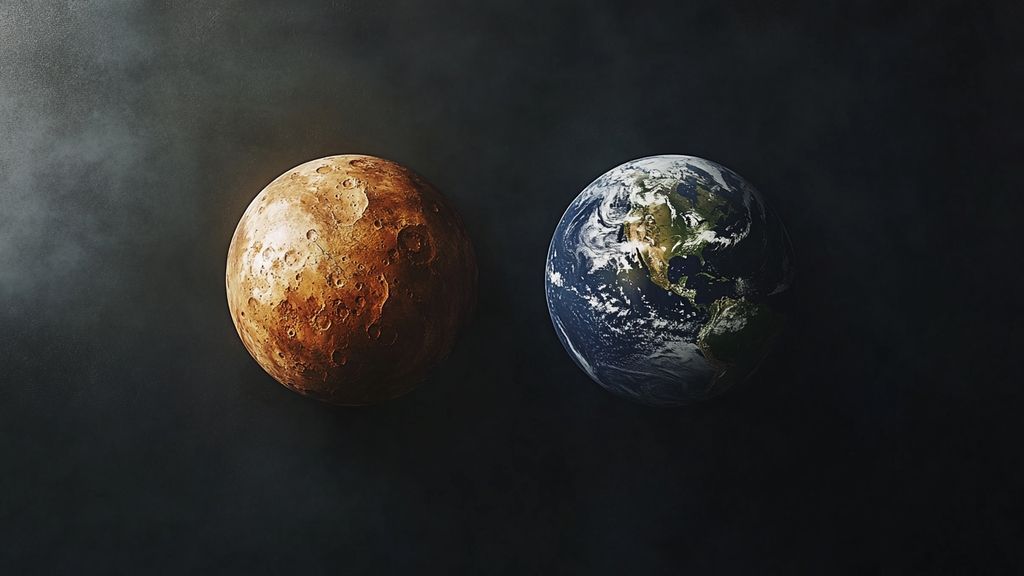
Brown dwarfs: objects between planets and stars

Brown dwarfs intrigue and captivate contemporary astronomers, gradually redirecting our gaze towards these singular celestial bodies whose nature still eludes a rigid classification. These substellar objects intercalate between the gigantic gas giants like Jupiter and the cold stars of low mass, proving to be both luminous and tenuous, massive yet incapable of sustaining classical nuclear … Read more

The evolution of planetary habitability

The evolution of planetary habitability represents a fundamental scientific quest, intertwining astronomy, geology, climatology, and biology. Since the discovery of the first exoplanets, researchers have been trying to understand how certain planets can support life, relying on Earth as the main model. The exploration of planetary systems, habitable zones around stars, and the study of … Read more

translated_content> Applied geophysics to other planets

La géophysique appliquée à d'autres planètes

IN BRIEF Planetary geophysics: study of the physical characteristics of other planets. Use of geophysical methods to explore internal and external structure. Application of principles from physics and astronomy. Analysis of natural phenomena on other celestial bodies. Development of tools like Dynamico to model atmospheric circulation. Assessment of climatic conditions on other planets. Importance of … Read more